Pokhara Trip Cost: A 5-Day Budget for Indian Travellers
Estimate your five-day Pokhara holiday budget in Indian rupees, from backpacker stays and local buses to mid-range hotels, boating, viewpoints and optional adventure activities.

Quick answer
Pokhara trip cost for five days is approximately ₹18,000–₹28,000 per person for a budget visit from India, excluding international or long-distance travel to Nepal. A mid-range plan usually costs ₹30,000–₹48,000, while a comfortable trip can cross ₹55,000. These ranges cover accommodation, food, local transport, viewpoints, boating and a short hike; flights, rafting, paragliding, trekking permits and shopping can raise the total. Road travel is cheaper but slower, while flights save time.
Key facts at a glance
| Ideal duration | 5 days, including local sightseeing |
|---|---|
| Approx. local budget | ₹18,000–₹55,000 per person |
| Nearest airport | Pokhara International Airport; Kathmandu is the main gateway |
| Nearest railway station | Gorakhpur, Uttar Pradesh; onward road travel required |
| How to reach | Flight via Kathmandu or road via Sunauli/Bhairahawa |
| Best months | October–November and March–April, approx. |
| Altitude | Pokhara city is approx. 800 m; Sarangkot is approx. 1,600 m |
| Permits | Check current ACAP/TIMS rules for trekking routes |
What your five-day Pokhara budget should include
Pokhara is one of Nepal’s easier destinations for Indian travellers to plan independently. The city has lakeside cafés, short hikes, viewpoints, temples, waterfalls and access to the Annapurna region. Your final Pokhara trip cost depends less on sightseeing tickets and more on how you reach Nepal, the type of room you book and whether you add paragliding, rafting or a longer trek.
This Pokhara itinerary for 5 days uses broad planning bands per person. For a five-day stay, use the following estimates. They are approximate, intended for October 2026 planning and can change with exchange rates, festivals, fuel prices, weekends and booking demand.
| Travel style | Approx. five-day local spend | What it usually includes | Best suited to |
|---|---|---|---|
| Budget | ₹18,000–₹28,000 | Hostel or simple room, local food, buses, selected paid activities | Backpackers, students and couples sharing a room |
| Mid-range | ₹30,000–₹48,000 | Comfortable hotel, mixed taxis and buses, better meals, boating and viewpoints | Most first-time visitors and small families |
| Comfortable | ₹55,000–₹85,000 or more | Good hotel, private transfers, restaurant meals and one or more adventure activities | Travellers prioritising convenience and flexible sightseeing |
These figures generally exclude your international or long-distance journey from your Indian city to Nepal. A flight from India to Kathmandu, or a train-and-road journey to the Sunauli border, should be calculated separately. For a fuller planning framework, use a detailed Pokhara travel guide alongside your transport and hotel quotations.
How to reach Pokhara from India
By air
The quickest option is to fly from an Indian city to Kathmandu and then take a separate domestic flight to Pokhara. Some routes may have limited schedules or seasonal changes, so compare the complete itinerary rather than assuming a convenient same-day connection. Allow a buffer between international and domestic flights. The total air journey may save a full road day but can add substantially to your Pokhara travel cost.
Pokhara International Airport serves the city, while Tribhuvan International Airport in Kathmandu is Nepal’s principal international gateway. From Pokhara airport, Lakeside is roughly 4–7 km away and usually takes about 15–30 minutes by taxi, depending on traffic and the exact hotel.
By road via Sunauli and Bhairahawa
For travellers coming from Uttar Pradesh, Bihar or nearby northern states, a road route through Sunauli can be economical. Gorakhpur railway station is approximately 95 km from the Sunauli border area, though the entire border-to-Pokhara journey is much longer. After crossing into Nepal near Bhairahawa, Pokhara is roughly 185–220 km away and the drive commonly takes about 7–10 hours, depending on road conditions, stops and traffic.
Shared jeeps, buses and private cars operate on parts of this route. A private vehicle is faster and more comfortable but costs more, especially for a solo traveller. Check border procedures and vehicle rules before departure; requirements can differ for private cars, hired taxis and buses.
By road from Kathmandu
Kathmandu to Pokhara is approximately 200–215 km by road. This Kathmandu to Pokhara transport journey often takes around 7–10 hours, and construction, weather and traffic can make it longer. Tourist buses are usually better value than a private car, while a private transfer helps families with luggage or travellers who want flexible stops. Road fares are not fixed for all operators, so treat online listings as indicative rather than guaranteed.
Five-day Pokhara itinerary with practical costs
Day 1: Arrive and settle in Lakeside
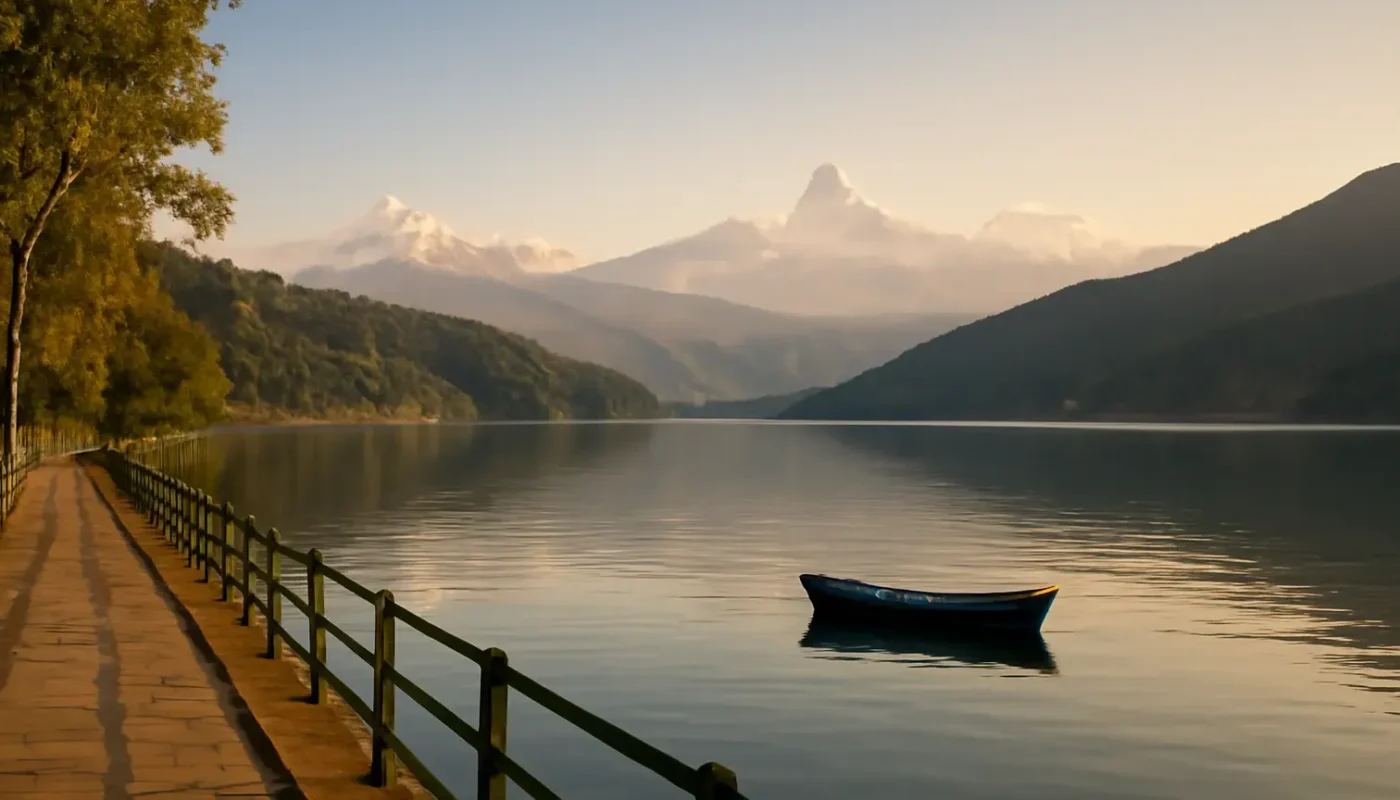
Stay around Lakeside, also known locally as Baidam, where restaurants, shops, money changers and tour desks are concentrated. After checking in, walk beside Phewa Lake, visit the waterfront and watch the evening light over the hills. This is a low-cost day: a simple meal, airport or bus-station transfer and optional café stop may total approximately ₹800–₹2,500 per person, excluding accommodation.
Day 2: Phewa Lake, Tal Barahi and World Peace Pagoda
Take a short boat ride on Phewa Lake and consider visiting Tal Barahi Temple on the lake island. For the Pokhara boating cost, remember that charges are commonly quoted per boat or by duration, not always per passenger. Confirm the total price, waiting time and life-jacket arrangements before boarding. Sharing a boat can make the activity cheaper.
Continue to the World Peace Pagoda, either by taxi to the lower trail or by combining a boat crossing with the uphill walk, depending on local conditions. The World Peace Pagoda hike is short but includes uneven and steep sections. A budget traveller can manage this day with walking and a shared ride; a mid-range traveller may spend approximately ₹1,200–₹3,000 on transport, boating, food and small entry charges.
Day 3: Sarangkot sunrise and Devi’s Fall
The Sarangkot sunrise experience is approximately 10–12 km from central Pokhara and is known for mountain views and sunrise. A pre-dawn taxi is the most convenient option, but a shared vehicle or group tour can reduce the cost. Visibility is weather-dependent, so do not treat sunrise views as guaranteed.
Return towards the city for Devi’s Fall and Gupteshwor Mahadev Cave. Entry fees, local transport and opening arrangements can change, particularly during festivals or maintenance. Keep clothing respectful when visiting religious sites. Set aside approximately ₹1,000–₹3,000 for this sightseeing day, depending on whether you use a private taxi.
Day 4: Choose a short hike or an adventure activity
Good lower-commitment options include the Australian Camp or Dhampus area, Naudanda viewpoints, or a walk around the World Peace Pagoda and forested trails. Route conditions, guide needs and transport availability vary. A short hike outside the city is usually more affordable than a full trekking itinerary, but check whether the selected trail enters the Annapurna Conservation Area.
Pokhara adventure activities include paragliding from Sarangkot, ziplining, rafting and ultralight flights. These are optional additions and can change your budget considerably. A realistic planning allowance is approximately ₹4,000–₹12,000 or more for a major activity, depending on the operator, duration, insurance terms, transfers and season. Book only with a properly registered operator and confirm weather cancellation policies.
Day 5: Easy morning and departure
Use the final morning for a lakeside walk, souvenir shopping or a relaxed breakfast. Leave extra time for road travel or airport procedures. If you are returning by road to Kathmandu or the Sunauli area, avoid scheduling a tight same-day international connection without a substantial buffer.
Pokhara accommodation and food costs
Lakeside is the easiest base for a first visit, but Pokhara hotel prices vary across the area. Rooms a few lanes away from the waterfront are often quieter and better value. Damside can suit travellers who prefer a calmer atmosphere, while the airport area is practical for an early flight but less convenient for evening walks and restaurant choice. Pokhara budget hotels may offer the best value when you compare what is included rather than choosing only by headline price.
- Budget: Approximately ₹700–₹1,800 per person per night in a hostel dorm or simple guesthouse, with the lowest rates usually depending on shared facilities and advance availability.
- Mid-range: Approximately ₹2,500–₹6,000 per room per night for a clean hotel or guesthouse, often better value when two people share.
- Comfortable: Approximately ₹7,000–₹15,000 or more per room per night for a polished hotel, resort-style property or a room with better views and services.
Check whether breakfast, taxes, airport transfers, heating, hot water and card surcharges are included. October–November can bring strong demand, while Nepali festival periods such as Dashain and Tihar may affect availability and rates.
Pokhara food prices are flexible. Local dal bhat, thukpa, chow mein and momos can keep a budget day near approximately ₹500–₹900 per person if you eat at modest restaurants. Cafés, international menus and hotel dining can take a mid-range food budget to approximately ₹1,200–₹2,500 daily. Bottled water, coffee, snacks and alcohol are easy to overlook when estimating the total.
Local transport and everyday spending
Pokhara local transport is easiest to manage by walking around central Lakeside. Local buses and shared vehicles cost less but may be crowded and less useful for sunrise trips. Taxis are convenient for Sarangkot, trailheads, the airport and late-evening returns. Ask whether a fare is for the complete vehicle or each passenger, and agree on the price before departure when a meter is not used.
For a budget plan, allow approximately ₹1,500–₹3,000 per person for five days of mixed walking, local buses and occasional shared rides. A mid-range visitor using taxis for viewpoints may spend approximately ₹4,000–₹8,000. Private day transport can cost more, especially for a group with a driver and vehicle reserved for several hours.
Carry small Nepalese rupee notes for cafés, buses, small entrances and local shops. Exchange rates and card acceptance vary. Indian travellers should carry an accepted identity document and avoid assuming that every Indian banknote denomination will be accepted by every business. Confirm exchange and payment arrangements locally.
Permits, documents and activity checks
Indian nationals should carry a valid passport or another identity document accepted for the specific mode of travel. Aadhaar should not be treated as a universal international travel document. Airline and border requirements can differ, so verify them before leaving India, especially for children and air travel.
Ordinary city sightseeing does not automatically mean you need a trekking permit. However, routes entering the Annapurna Conservation Area may require an ACAP permit and, depending on the route and current rules, a TIMS registration. Check the latest Pokhara trekking permits requirements with a registered trekking agency, the Nepal Tourism Board or the relevant conservation authority before starting a hike. Requirements, fees and enforcement can change.
For boating, rafting and paragliding, confirm operator registration, equipment, weather cancellation rules, personal insurance coverage and what the quoted price includes. Keep photocopies or secure digital copies of identity documents, emergency contacts and insurance details.
Best time to visit Pokhara for value and weather
| Period | Conditions | Budget impact | Who it suits |
|---|---|---|---|
| October–November | Generally clearer mountain-view season, with cool mornings | Demand and room rates can rise | Viewpoints, photography and first-time visitors |
| December–February | Cold mornings and possible haze; lower temperatures at viewpoints | Potentially better value outside holidays | Walkers who pack warm layers |
| March–April | Warmer, often good for flowers and outdoor activities | Moderate to high demand around holidays | Short hikes and mixed sightseeing |
| June–September | Monsoon rain, cloud and possible road disruption | Often lower rates, but plans need flexibility | Slow travel and travellers comfortable with uncertain views |
October is an attractive month for the trip described here, but it can also overlap with busy Nepali holiday travel. Book transport and popular hotels earlier if your dates are fixed. Weather can still disrupt flights, mountain views and adventure departures.
What to pack and mistakes to avoid
- Pack layers, a light rain shell, comfortable walking shoes, sunscreen, a refillable bottle and a small daypack.
- Carry modest clothing for temples and villages; ask before photographing people, ceremonies or religious spaces.
- Do not book every activity in advance when weather-sensitive plans are central to your trip.
- Do not compare only the headline hotel price. Add taxes, breakfast, transfers and cancellation conditions.
- Do not assume the cheapest road route is best if it leaves you exhausted or risks a missed flight.
- Keep an emergency buffer of approximately 10–15% above your planned budget for delays, taxis, meals and currency differences.
Pokhara city is at a relatively low elevation, but Sarangkot and trail areas are higher, and longer Annapurna treks involve much greater altitude. Increase exertion gradually, stay hydrated and consult a doctor before high-altitude travel if you have a relevant health condition. Seek local guidance if you feel unwell on a trek.
Who this Pokhara budget trip suits
This five-day plan suits first-time visitors who want a combination of nature, easy viewpoints, lake time and optional adventure without committing to a long trek. It works particularly well for couples sharing rooms, small groups splitting taxis and families who choose private transfers for convenience.
Solo backpackers can lower the cost through dormitories, buses and shared tours, but may spend more per person on private taxis or boating. Travellers seeking luxury should treat the comfortable range as a starting point rather than a ceiling, especially during peak season or when adding flights and premium activities. If you prefer a fixed itinerary with transport bundled together, compare reputable Pokhara tour packages carefully and check exactly what is excluded.
Bottom line
A practical five-day Pokhara trip cost for an Indian traveller is approximately ₹18,000–₹28,000 locally on a careful budget, ₹30,000–₹48,000 for mid-range comfort and ₹55,000 or more for a convenient, activity-rich holiday. Keep long-distance travel, permits and adventure activities separate in your calculation. Choose the road route to save money and the flight route to save time, then retain a contingency for weather, festivals and changing local prices.
Before you go: prices, timings, permits and road conditions change by season. Please confirm the latest details with Nepal Tourism Board, Nepal Department of Immigration, Tribhuvan International Airport and Pokhara International Airport authorities or airline operator. Last reviewed: October 2026.
Frequently Asked Questions
How much does a 5-day Pokhara trip cost from India?
Excluding your journey from your Indian city to Nepal, plan approximately ₹18,000–₹28,000 per person for a budget trip, ₹30,000–₹48,000 for mid-range travel or ₹55,000 and above for a comfortable plan. Flights, adventure activities, permits and shopping can increase the total.
What is the cheapest way to travel from India to Pokhara?
For many travellers from northern India, train or road travel towards Gorakhpur followed by the Sunauli–Bhairahawa border route and a bus or shared vehicle to Pokhara can cost less than flying. It is slower, usually taking a full travel day or more, and border and road conditions should be checked before departure.
Is Pokhara expensive for Indian tourists?
Pokhara can be affordable when you use simple guesthouses, local food, walking and shared transport. Accommodation in peak season, private taxis, cafés and activities such as paragliding can make it considerably more expensive. Sharing rooms and vehicles is one of the easiest ways to lower the per-person cost.
How much money should I carry for Pokhara?
Carry a mix of Nepalese currency and a reliable payment option, with enough for one or two days of food, local transport and small expenses. A contingency of approximately 10–15% above your planned budget is sensible because exchange rates, card acceptance, weather delays and taxi fares vary.
What are the best free places to visit in Pokhara?
The Lakeside waterfront, selected neighbourhood walks and some viewpoints along public roads can be enjoyed without a major entry fee. Phewa Lake walks are free, while boating, temples, caves, waterfalls, conservation areas and transport may involve separate charges.
Do Indians need a permit for short hikes around Pokhara?
Not every short city walk requires a permit, but trails entering the Annapurna Conservation Area may require ACAP and possibly TIMS registration under current rules. Confirm the route and latest requirements with the Nepal Tourism Board, a registered trekking agency or the conservation authority before walking.

Written by