Janakpur Nepal trip: A 2-day plan for Indian pilgrims
A practical two-day Janakpur plan for Indian pilgrims, covering Janaki Mandir, Mithila culture, border crossings, local transport, stay areas, costs and temple etiquette.

Quick answer
A Janakpur Nepal trip works well in two days: arrive through Jayanagar by train, the Jaleshwar road border, or Janakpur Airport; visit Janaki Mandir, Ram Mandir, Dhanush Sagar and Ganga Sagar on day one; then explore Mithila art, Sita Kund and nearby shrines on day two. Indian citizens should carry an accepted passport or voter ID, confirm border procedures, and allow extra time for immigration, crowds and changing transport schedules.
Key facts at a glance
| Ideal duration | 2 days / 1-2 nights |
|---|---|
| Best time to visit | October to March; festivals are crowded |
| Nearest airport | Janakpur Airport, approx. 5 km from centre |
| Nearest railway station | Janakpur Dham railway station |
| How to reach | Jayanagar train, road borders or Kathmandu flight |
| Approx. budget | ₹5,000-₹12,000 per person, excluding long-distance travel |
| Indian entry documents | Passport or accepted voter ID; verify before departure |
| Altitude | Approx. 75-80 m; no high-altitude concern |
A Janakpur Nepal trip is a manageable pilgrimage for Indian travellers who want to combine temple visits with Mithila culture. The city in Nepal’s Madhesh Province is associated with Sita, or Janaki, and is best explored slowly rather than as a rushed day excursion. This two-day plan keeps Janaki Mandir at its centre, adds the main ponds and shrines, and leaves time for border formalities, local transport and respectful visits.
Janakpur is close to India, but international travel still requires document checks and some planning. Timetables, road conditions, currency exchange rates and temple crowd levels can change, particularly around Ram Navami and Vivah Panchami. Treat the timings and costs below as planning ranges, not fixed current schedules.
Janakpur itinerary: how to reach from India
Most Indian visitors choose the route that best matches their home city. The direct rail option is convenient for travellers from Bihar and eastern Uttar Pradesh, while flights suit visitors connecting through Kathmandu. Road crossings are useful when travelling with family, luggage or a private vehicle.
| Route | Approximate travel pattern | Best suited to | Trade-off |
|---|---|---|---|
| Jayanagar to Janakpur | Cross-border train; allow approx. 2-4 hours including local formalities and waiting | Budget pilgrims from Bihar and nearby states | Limited or changing schedules; verify before leaving |
| Road via Jaleshwar | Jayanagar or Darbhanga side to Jaleshwar, then approx. 2-4 hours onward depending on traffic | Families, groups and travellers carrying luggage | Border queues and road conditions can add time |
| Flight via Kathmandu | Domestic connection to Janakpur Airport; allow a half-day overall | Travellers from distant Indian cities | Usually costs more and depends on flight availability |
| Road via Birgunj | Longer approach from Raxaul; Janakpur is roughly 250-270 km away by road | Travellers already visiting central Nepal | Not the quickest route for a dedicated pilgrimage |
Can I travel from Jayanagar to Janakpur by train?
Yes, the Jayanagar Janakpur train is the most direct public-transport choice, but travellers should confirm the operating days, ticket process and border requirements shortly before departure. Start at Jayanagar railway station in Madhubani district, keep your documents accessible, and do not plan a tightly timed onward connection on arrival.
The road border around Jaleshwar is another practical option. From Darbhanga, the journey can take roughly 4-7 hours in total depending on the starting point, traffic and immigration queues. A private taxi may drop passengers at the border, after which a Nepal-side vehicle may be needed. Indian-registered vehicles should check current entry permissions, paperwork and any applicable charges before crossing.
Flying is usually the simplest option for visitors from Delhi, Mumbai, Bengaluru or Kolkata if a suitable connection is available. Janakpur Airport is approximately 5 km from central Janakpur. Kathmandu is also useful for a longer Nepal holiday, but adding Janakpur by air makes the overall plan more expensive and schedule-dependent.
Documents, border crossing and money planning
Indian citizens generally do not need a tourist visa for Nepal, but they should carry an accepted identity and travel document. A valid Indian passport or Indian voter ID is the safer choice; Aadhaar should not be assumed to be accepted for international travel. Children, foreign nationals travelling with Indian families and passengers using a vehicle may have additional requirements.
- Carry original documents, photocopies and digital backups stored securely.
- Check the current Nepal entry guidance and border procedure before departure.
- Use authorised exchange counters or banks, and retain small Indian notes only where they are legally and practically accepted.
- Ask hotels about local payment options; card and QR availability can vary.
- Keep extra time for checks at the border crossing to Nepal, especially on weekends and festival dates.
Do not photograph immigration staff, security areas or people without permission. If travelling in a group, agree on a meeting point before crossing because mobile connectivity and roaming can be inconsistent.
Janakpur itinerary: the best two-day route
Day 1: Janaki Mandir, sacred ponds and evening prayers
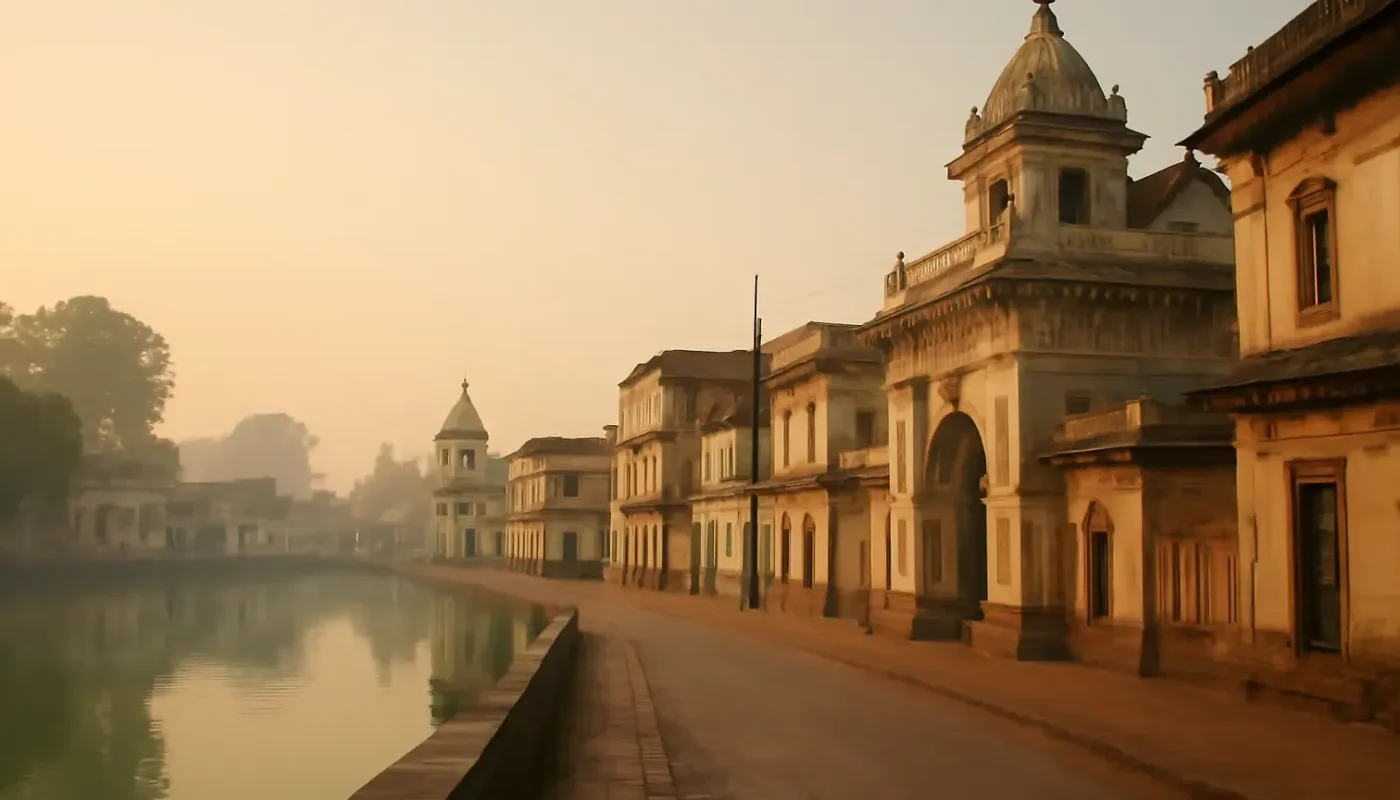
After checking in, begin with Janaki Mandir, the white palace-style temple dedicated to Sita and one of Nepal’s most important Hindu pilgrimage sites. Give yourself at least one to two hours for darshan, queuing and viewing the architecture. Temple timings and access arrangements can vary, so follow the notice boards and instructions from temple staff rather than relying on old online listings.
Dress modestly, remove footwear where required, keep phones on silent and ask before taking photographs inside worship areas. A small donation is voluntary; avoid pressuring priests or accepting unrequested paid services.
Walk or take a short local ride to Dhanush Sagar and Ganga Sagar, two prominent ponds near the temple area. The spaces are most atmospheric in the late afternoon, when pilgrims gather and the light softens. Keep the ghats clean, avoid entering the water unless local guidance permits it, and be careful on wet steps.
Continue to Ram Mandir and nearby shrines if energy and crowd conditions allow. In the evening, return to the temple vicinity for prayers or a quiet walk through the market. Try simple Mithila cuisine, such as puri-tarkari, dal-bhat, seasonal vegetables or sweets, at a busy, hygienic local establishment.
Day 2: Mithila culture, Sita-linked sites and a relaxed departure
Start early with a second visit to Janaki Mandir if your first darshan was crowded. Morning is usually more comfortable for pilgrims who prefer cooler weather and shorter walks, although actual crowd patterns change by day.
Use the rest of the morning to see Sita Kund and other local shrines associated with the Ramayana tradition. The exact circuit can be adjusted with a trusted local guide because some sites are modest, spread across busy neighbourhoods or best understood through local context.
Set aside time for Mithila art. Look for workshops, cultural centres or women-led craft outlets where artists explain the symbolism and process behind the paintings. Buying directly from artists or established cooperatives is more meaningful than bargaining aggressively in a tourist market. Ask before photographing a maker or their work.
Have lunch, collect your luggage and leave a generous buffer for the railway station, airport or border. If departing by road, a late afternoon departure may be slower than expected. Travellers extending their holiday can connect onward to Kathmandu, while those planning a wider route may compare this stop with a Nepal 7 day itinerary Kathmandu Pokhara.
What is the best time to visit Janakpur?
The best time to visit Janakpur is generally October to March, when daytime sightseeing is more comfortable than during the hot and humid months. October and November can be especially pleasant, but festival dates bring large crowds and higher demand for rooms and transport.
| Season | What to expect | Planning advice |
|---|---|---|
| October-November | Comfortable sightseeing; major religious activity may begin | Book early around festival weekends |
| December-February | Cool mornings and evenings, clearer pilgrimage conditions | Carry a light jacket and allow for fog-related delays |
| March-April | Warmer days; Ram Navami period can be busy | Plan early starts and confirm accommodation |
| May-September | Hot, humid or wet conditions; possible road disruption | Carry rain protection and keep transport buffers |
Vivah Panchami, which celebrates the wedding of Ram and Sita, is one of the busiest periods in Janakpur. Ram Navami can also bring processions and heavy temple footfall. These festivals are rewarding for devotees who want a communal experience, but they are less suitable for travellers seeking quiet sightseeing.
Janakpur travel guide: where to stay
For a first pilgrimage, staying near Janaki Mandir or Ramanand Chowk is convenient. You can reach the main temple area quickly and find restaurants, shops and local transport nearby. The trade-off is more street activity, noise and congestion, particularly during festivals.
Hotels near Ramanand Chowk usually suit travellers who want a wider choice of eateries and easier access to taxis. Properties closer to the temple suit elderly pilgrims and families who prefer to reduce daily travel. Before booking, confirm lift access, hot water, backup power, air-conditioning or heating, luggage storage and the property’s check-in policy.
Basic rooms may cost approximately ₹1,000-₹2,500 per night, while comfortable mid-range rooms may be around ₹2,500-₹5,500. Festival periods can push rates higher. Read recent reviews carefully, but also call the property to confirm what is included. A useful Janakpur travel guide should treat location and cleanliness as more important than decorative facilities for a short pilgrimage.
Local transport, food and practical costs
Central Janakpur is walkable in sections, but heat, crowds and uneven pavements make short rides useful. E-rickshaws and cycle rickshaws are common for nearby trips; taxis are better for airport transfers, outlying shrines and groups with luggage. Agree on the fare before starting when a meter is unavailable, or ask the hotel to arrange a vehicle.
A realistic Janakpur budget for two days is approximately ₹5,000-₹12,000 per person excluding travel from your Indian city. Your total depends mainly on the room type and the route used.
- Accommodation: approx. ₹1,000-₹5,500 per room per night.
- Meals and water: approx. ₹500-₹1,200 per person per day.
- Local transport: approx. ₹300-₹1,000 per person per day, more for a dedicated taxi.
- Guide, donations and small purchases: approx. ₹300-₹1,500, entirely optional.
- Cross-border or long-distance transport: variable by origin, season and booking method.
Try local Mithila cuisine, but choose freshly prepared food and sealed drinking water if your stomach is sensitive. Keep a small amount of cash for temple-area purchases and short rickshaw rides.
Temple etiquette and what to pack
Janakpur is a living religious city, not only a sightseeing destination. Cover shoulders and knees, avoid loud conversations, follow queues and never interrupt rituals for photographs. Some shrines may restrict photography, leather items or entry during particular ceremonies. Ask respectfully rather than assuming that a rule at one temple applies everywhere.
- Carry a modest, breathable outfit plus a light layer for winter mornings.
- Pack easy-to-remove footwear, a reusable water bottle, sunscreen and a small umbrella.
- Use a cross-body pouch for documents and keep valuables discreet.
- Carry basic medicines that you already use, but consult a doctor for personal health concerns.
- Bring photocopies of identity documents and a power bank for border and transport delays.
There is no high-altitude concern in Janakpur, which lies at roughly 75-80 metres above sea level. Heat, dehydration, dust and crowded spaces are more relevant practical concerns. Older travellers should plan regular rests and avoid packing too many shrines into one afternoon.
Common mistakes to avoid
- Arriving without documents: Do not rely on Aadhaar alone; confirm acceptable identification before crossing.
- Using an outdated timetable: Recheck trains, flights, temple access and border procedures shortly before travel.
- Overpacking the itinerary: Janaki Mandir, the ponds and local shrines need time, especially during festivals.
- Booking too far from the centre: A cheaper room may cost more in time and transport, particularly for elderly pilgrims.
- Accepting unsolicited services: Ask for prices and identities before hiring a guide, porter or priest.
- Ignoring the return buffer: Keep several hours between your city transfer and a fixed train or flight.
Is Janakpur worth visiting in two days?
Is Janakpur worth visiting in two days?
Yes, two days are enough for the principal temples, sacred ponds and an introduction to Mithila culture, provided you avoid trying to cover every shrine. A one-night stay is practical for pilgrims arriving by train or road; two nights are better during festival periods or for older travellers.
This plan suits families, first-time Nepal visitors and devotees who want a focused cultural journey. It is less suitable if your priority is Himalayan scenery, trekking or nightlife; destinations such as Pokhara, Rishikesh or Kedarnath serve different travel interests. Travellers comparing organised Janakpur tour packages should check whether border transfers, hotel taxes, meals and temple-area transport are actually included.
Bottom line
A well-paced Janakpur Nepal trip needs only two days but benefits from careful border planning. Base yourself near Janaki Mandir or Ramanand Chowk, keep day one for the main pilgrimage circuit, use day two for Mithila art and quieter shrines, and allow generous buffers for transport. Carry accepted documents, respect temple customs and verify changing schedules before leaving India.
Before you go: prices, timings, permits and road conditions change by season. Please confirm the latest details with Nepal Department of Immigration, Nepal Tourism Board, Madhesh Province tourism authorities and Indian Embassy in Kathmandu or nearest consular information office. Last reviewed: October 2026.
Frequently Asked Questions
How do I reach Janakpur from India?
The most direct options are the Jayanagar-Janakpur train, a road crossing near Jaleshwar, or a flight via Kathmandu to Janakpur Airport. The best choice depends on your Indian origin city, budget and tolerance for border or schedule uncertainty.
What documents do Indians need for Janakpur?
Indian travellers should carry an accepted original identity document, preferably a valid Indian passport or voter ID, plus copies. Aadhaar should not be assumed to work as an international travel document; verify current requirements before departure.
Where should I stay in Janakpur near Janaki Mandir?
Stay near Janaki Mandir for walkable temple access, or around Ramanand Chowk for more restaurants and local transport. Rooms farther away may be quieter or cheaper but require extra travel time.
How much does a Janakpur trip cost from India?
Excluding travel from your home city, allow approximately ₹5,000-₹12,000 per person for two days, depending on room type, food, local transport, donations and festival demand.
What should I wear to Janaki Mandir?
Wear clean, modest clothing covering the shoulders and knees, and carry footwear that is easy to remove. Follow temple-specific instructions about photography, queues and restricted areas.
When is the best time to visit Janakpur?
October to March is generally the most comfortable season. Festival periods such as Vivah Panchami and Ram Navami offer a lively devotional atmosphere but require early booking and patience with crowds.

Written by