Kashmir travel guide for first-timers: routes, stays and costs
Plan your first Kashmir holiday with clear choices on duration, base towns, routes, transport, accommodation and seasonal budgets—from Srinagar to Gulmarg, Pahalgam and Sonamarg.

Quick answer
This kashmir travel guide recommends 6–8 days for a first trip: base yourself in Srinagar, then choose Gulmarg for snow and cable-car views, Pahalgam for valleys and slower stays, or Sonamarg for a shorter mountain outing. Fly to Srinagar for the easiest route; trains reach Jammu, followed by a longer road journey. Plan approx. ₹25,000–₹60,000 per person excluding flights for a mid-range trip, with costs rising during peak snow and holiday periods.
Key facts at a glance
| Ideal duration | 6–8 days for Srinagar, Gulmarg and Pahalgam |
|---|---|
| Best broad season | April–June or September–October; snow in winter |
| Nearest airport | Srinagar International Airport, approx. 12 km from central Srinagar |
| Nearest rail access | Jammu Tawi, approx. 250–300 km from Srinagar by road |
| Approx. budget | ₹25,000–₹60,000 per person, excluding flights |
| How to reach | Fly to Srinagar; rail travellers continue from Jammu by road |
| Altitude caution | Gulmarg and Sonamarg are high-altitude outings; acclimatise and plan gently |
| Permits | Usually none for the main tourist circuit; restricted routes can change |
Start with the right Kashmir route
A first Kashmir holiday becomes easier when you choose towns according to the kind of trip you want rather than trying to cover every attraction. Srinagar is the practical anchor for lakes, gardens, food and airport access. Gulmarg suits snow, skiing and panoramic mountain scenery. Pahalgam is better for riverside walks, pine forests and a slower family or couple’s stay. Sonamarg works well as a day trip or one-night mountain stop from Srinagar, although onward access towards Zoji La can be seasonal and locally regulated.
For packages, routes and FAQs in one place, see our Kashmir travel guide.
Good Kashmir trip planning starts with accepting that each base has a different role. For most Indian travellers, a 6–8 day Kashmir itinerary for 7 days gives enough time without turning every day into a transfer. A 4–5 day break should focus on Srinagar plus either Gulmarg or Pahalgam. A 9–12 day holiday can add a second night in the countryside, a less hurried Srinagar stay and carefully checked remote routes.
| Route or base | Approx. road time from Srinagar | Best for | Trade-off |
|---|---|---|---|
| Srinagar | Local travel | First-time visitors, food, gardens, Dal Lake | Urban traffic and fewer alpine landscapes within the city |
| Gulmarg | Approx. 2–3 hours | Snow, skiing, Gondola views, short mountain break | Weather and cable-car operations can disrupt plans |
| Pahalgam | Approx. 2.5–4 hours | Families, valleys, horse rides, nature and relaxed stays | Popular days can be crowded; some valley excursions need local transport |
| Sonamarg | Approx. 2–3 hours | Glaciers, mountain scenery and a short excursion | Weather and seasonal road restrictions affect access |
How to reach Kashmir: air, rail and road choices
By air
Srinagar International Airport is the simplest arrival point for most travellers. It is approximately 12 km from central Srinagar, though traffic can make the transfer take roughly 30–60 minutes. Flights from Delhi, Mumbai, Bengaluru, Hyderabad and other Indian cities vary considerably by date, school holidays and weather.
If you are comparing the Srinagar to Gulmarg route, flying into Srinagar and continuing by road is generally the simpler option. Compare a flight to Srinagar with a flight to Jammu before booking, but remember that Jammu adds a long road journey. Pre-arrange a hotel transfer or use a locally recommended taxi operator. Confirm the pickup point, vehicle type, luggage space and late-arrival policy in writing.
By train and road
Jammu Tawi is the usual rail gateway for travellers arriving by train. Jammu to Srinagar is approximately 250–300 km by road and commonly takes about 7–10 hours, depending on traffic, weather, road conditions and stops. The railway network in the Kashmir Valley has expanded, but the useful rail connection for your particular origin and date must be checked on Indian Railways or IRCTC rather than assumed.
Rail plus road can make sense for a budget-conscious traveller, a longer holiday or a journey that includes Jammu and Vaishno Devi Temple. It is less comfortable than flying if you have only four or five days. Avoid scheduling a critical flight or train immediately after the Jammu–Srinagar drive; landslides, snow and traffic can cause delays.
By road from northern India
Self-driving from Delhi, Punjab or Himachal Pradesh is possible, but it is a demanding route with long distances, mountain roads and changing conditions. A road trip is most suitable for experienced drivers with flexible dates. Confirm current route conditions, parking arrangements and vehicle rules with local administration and accommodation providers.
How many days to plan: a practical itinerary
This 7-day Kashmir travel itinerary is a balanced starting point. It assumes arrival and departure through Srinagar and leaves room for weather or transport changes.
Day 1: Arrive in Srinagar
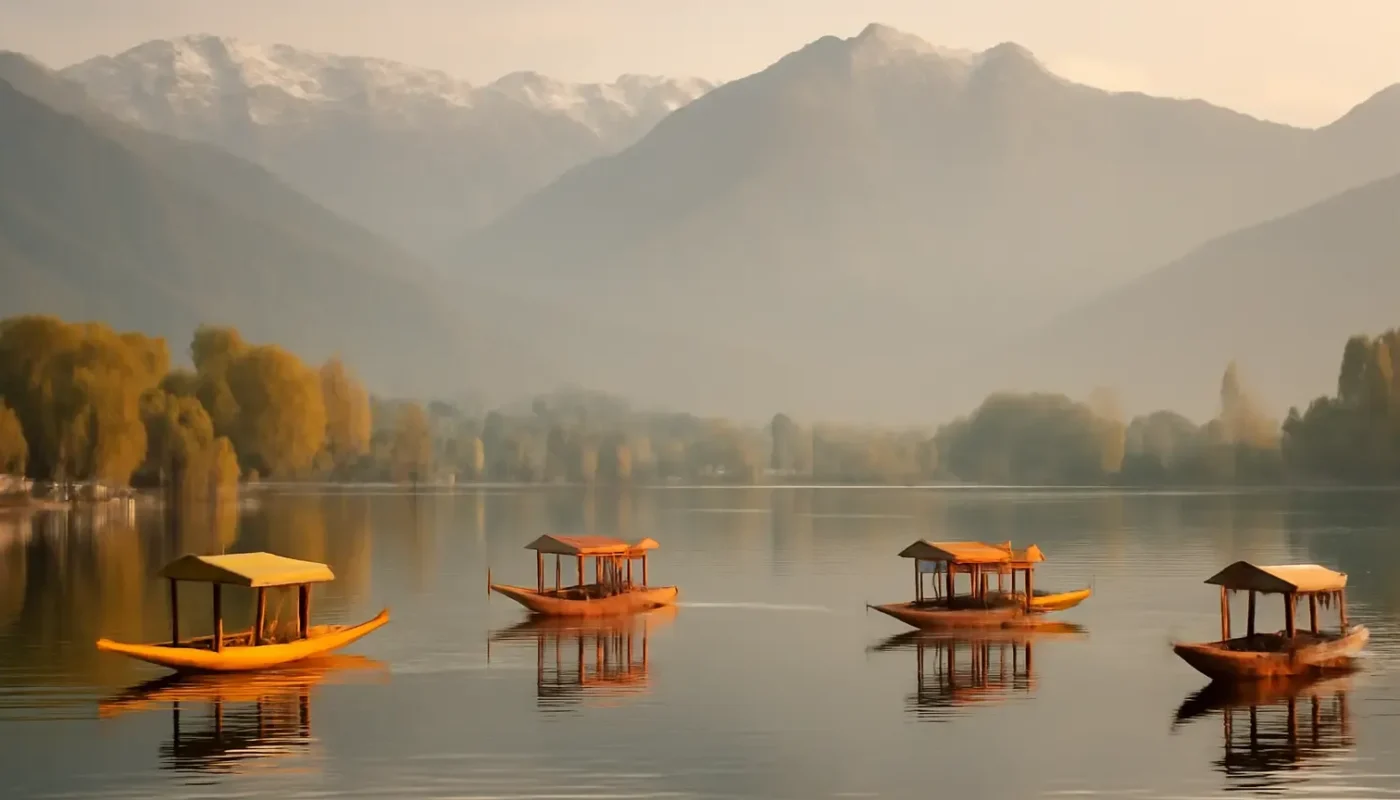
Keep the first day light. Check in around Dal Lake, Nigeen Lake, Rajbagh or a quieter residential area, then take an evening shikara ride if conditions and time permit. A shikara ride is a local experience, not merely a photo stop; agree on duration, route and price before boarding.
Day 2: Srinagar heritage and gardens
Visit Mughal gardens such as Nishat and Shalimar, see the old city respectfully and sample Kashmiri dishes. Add Pari Mahal or a lake-side sunset if your group prefers views over a packed schedule. Keep one flexible block because Srinagar traffic and entry queues vary.
Day 3: Gulmarg
Travel to Gulmarg for approximately 2–3 hours, depending on the starting point and road conditions. The Gondola is a separate, weather-sensitive activity. For sensible Gulmarg gondola planning, check official operating status and ticket instructions before committing. In winter, snow equipment and clothing can cost extra, and non-skiers should not feel pressured to book activities they do not need.
Day 4: Gulmarg to Srinagar or Pahalgam
Return to Srinagar for a three-base itinerary, or transfer towards Pahalgam if your booking and road conditions support it. The Srinagar to Pahalgam distance is commonly described as roughly 90–100 km by road, but journey time varies with traffic, stops and conditions. Avoid combining a long drive, Gondola visit and multiple sightseeing stops on the same day.
Day 5: Pahalgam
Spend time around the Lidder River and the main valley. Local sightseeing beyond the central area may involve designated vehicles, pony rides or local guides. Confirm the inclusions and rate before starting, and choose a gentle walk if travelling with children or older relatives.
Day 6: Pahalgam or Sonamarg option
Use this as a slow Pahalgam day, or return to Srinagar and visit Sonamarg if your transport plan allows. Sonamarg is often better as its own excursion than as a rushed add-on. Access beyond the main tourist area towards higher passes can be seasonal and controlled.
Day 7: Srinagar and departure
Keep the final morning for breakfast, shopping and a short lake or garden visit. Leave generous time for airport procedures and road traffic. If your departure is early, spend the previous night close to a dependable transfer route.
Best time to visit Kashmir by season
| Period | What to expect | Who it suits | Planning note |
|---|---|---|---|
| March–May | Spring colour, pleasant days, changing mountain weather | Gardens, photography and first-time sightseeing | Rain or late snow can alter higher-route plans |
| June–August | Green valleys and a popular summer escape | Families and travellers avoiding severe heat | Holiday demand can increase room and taxi costs |
| September–October | Clearer post-monsoon conditions and autumn tones | Walks, landscapes and a less heat-heavy trip | Pack layers; nights become colder |
| November–February | Cold weather, possible snow and winter activities | Snow seekers and skiers with flexible plans | Roads, flights and cable-car operations are weather-sensitive |
The best time to visit Kashmir depends on your priorities. Spring is attractive for gardens, summer is convenient for a Kashmir family holiday, autumn offers crisp scenery and winter is the choice for snow. Tulip Festival dates, snowfall, accommodation availability and activity operations change annually, so verify them before paying a non-refundable amount.
Where to stay: choose by travel style
- Dal Lake or Boulevard: convenient for first-time visitors, shikara rides, restaurants and evening walks. A Kashmir houseboat stay is atmospheric, but inspect recent reviews for heating, bathrooms, access and food arrangements.
- Nigeen Lake: quieter than the busiest parts of Dal Lake and suitable for travellers who value calm. It may mean longer taxi rides to some city sights.
- Rajbagh, Jawahar Nagar or central Srinagar: practical for families, business-style hotels and easier road access. These areas feel less like a lake holiday but can provide dependable services.
- Gulmarg: stay here for early access to snow activities and mountain scenery. Rates and availability can change sharply in peak winter and holiday periods.
- Pahalgam: choose a central stay for convenience or a quieter property outside the main market for space and views. Confirm heating, hot water and road access in colder months.
- Sonamarg: select an overnight stay only if you want a mountain-focused schedule and the current road situation supports it. Otherwise, a Srinagar base is simpler.
For any property, ask whether the quoted rate includes breakfast, heating, taxes, parking, transfers and extra beds. “Lake view” and “valley view” can mean different things, so request recent room photographs or a precise description.
Kashmir trip cost: realistic planning ranges
For a 6–8 day mid-range trip from an Indian metro, the Kashmir trip cost is approximately ₹25,000–₹60,000 per person excluding flights. This is a planning range, not a fixed tariff. Peak snow weeks, long weekends, festivals, room category, group size and booking lead time can move the total substantially.
| Expense | Approx. range per person | What changes it |
|---|---|---|
| Accommodation | ₹1,000–₹6,000 per night for a shared mid-range room | Town, season, heating, view and occupancy |
| Food | ₹500–₹1,500 per day | Hotel meals, cafés, restaurants and dietary needs |
| Local taxi and transfers | ₹6,000–₹18,000 for a shared 6–8 day plan | Vehicle size, route, waiting time and local sightseeing |
| Activities | ₹1,000–₹8,000 or more | Gondola, skiing, pony rides, guides and equipment |
| Flights | Highly variable; often ₹6,000–₹20,000 one way | Origin, booking date, holidays and demand |
Two or four travellers sharing a vehicle generally reduce the per-person transport cost. A private taxi gives flexibility but is not always the cheapest choice for solo travellers. Public transport and shared taxis may reduce costs, yet they can limit timing and luggage convenience. Keep a contingency of at least 10–15% for weather-related changes, extra nights or replacement transfers.
Local transport, permits and responsible travel
Kashmir local transport is easiest to manage when you confirm the route and vehicle rules in advance. For the main Srinagar–Gulmarg–Pahalgam circuit, many visitors use a pre-booked local taxi because public transport connections and sightseeing access are not equally convenient. Taxi unions, vehicle restrictions and local rates can affect whether a vehicle can continue into a particular tourist zone. Ask for a written itinerary with inclusions and confirm whether the driver waits during sightseeing.
There is usually no special permit for the principal tourist circuit, but Kashmir permits and access rules can change for border areas, high passes, trekking routes, protected landscapes and certain activities. Carry a government photo ID, booking confirmations, emergency contacts and copies stored securely. International visitors should also carry passport and visa or electronic travel authorisation details as applicable.
Check the current position with the Jammu and Kashmir Tourism Department, local administration, police advisories, the relevant national park authority and your accommodation. Respect photography restrictions, religious customs and local instructions. Dress modestly when visiting shrines and ask permission before photographing residents, workers or religious ceremonies.
What to pack and health precautions
Use this Kashmir packing list as a starting point:
- Pack layers rather than one very heavy garment: thermal wear in winter, a fleece or sweater, a waterproof outer layer and comfortable walking shoes.
- Carry sun protection, lip balm, a refillable water bottle, basic medicines prescribed for you and a small daypack.
- Winter travellers need warm socks, gloves and shoes with good grip. Snow gear can be rented in some destinations, but availability and quality vary.
- Gulmarg and Sonamarg are at higher elevations than Srinagar. Take the first day gently, stay hydrated and avoid overloading the itinerary. Anyone with a medical condition, pregnancy or concerns about altitude should consult a doctor before travel.
- Keep a buffer day if travelling during Kashmir winter travel or planning a tight flight connection. Weather can affect roads, flights and mountain activities.
Common first-trip mistakes to avoid
- Trying to cover Srinagar, Gulmarg, Pahalgam and Sonamarg in four days.
- Paying the full balance without confirming hotel facilities, cancellation terms and taxi inclusions.
- Assuming snowfall, autumn colour or a particular festival will occur on a guaranteed date.
- Booking the Gondola, skiing or a remote excursion without checking weather and official operating updates.
- Underestimating the Jammu–Srinagar road journey when comparing rail and air travel.
- Accepting activity or shopping recommendations without agreeing on prices and what is included.
- Ignoring local access restrictions or treating religious and community spaces as photo backdrops.
Who this Kashmir trip suits
This plan suits families, couples, first-time mountain travellers and small groups who want a comfortable introduction rather than an expedition. Families should prioritise shorter transfers, reliable heating and a flexible day for children. Couples can trade one Srinagar night for a quieter Pahalgam or Gulmarg stay. Solo travellers can reduce cost with shared excursions, but should choose reputable accommodation and confirm transport before heading to remote areas. Serious trekkers, skiers and travellers seeking offbeat valleys need a separate plan with specialist local guidance, equipment and current route permissions.
Bottom line
Build your first Kashmir holiday around Srinagar, then add Gulmarg for snow or Pahalgam for valleys; include Sonamarg only if the schedule and road conditions allow. Six to eight days is the most balanced duration. Fly to Srinagar when time matters, use Jammu by rail when the journey is part of the experience, and budget with seasonal ranges rather than fixed promises. Check official updates shortly before departure and keep at least one flexible day.
Before you go: prices, timings, permits and road conditions change by season. Please confirm the latest details with Jammu and Kashmir Tourism Department, Indian Railways and IRCTC, Srinagar International Airport and Jammu Tawi railway station information desk or railway authorities. Last reviewed: October 2026.
Frequently Asked Questions
How many days are enough for a Kashmir trip?
Six to eight days are usually enough for a first Kashmir trip covering Srinagar, Gulmarg and Pahalgam without rushing. Four to five days is better limited to Srinagar and one nearby base, while nine or more days allow slower stays and weather flexibility.
What is the best route for a first Kashmir trip?
A practical first route is Srinagar, Gulmarg, Pahalgam and Srinagar. Add Sonamarg as a day trip or overnight stop only after checking road and weather conditions. This route combines the lake and gardens of Srinagar, Gulmarg’s snow and Pahalgam’s valleys.
How much does a Kashmir trip cost per person?
A 6–8 day mid-range Kashmir trip costs approximately ₹25,000–₹60,000 per person excluding flights. Accommodation category, season, group size, taxi arrangements, activities and holiday demand can move the total outside this range.
Where should first-time visitors stay in Kashmir?
Srinagar is the best base for first-time visitors because it has the airport, broad accommodation choice and access to major sights. Choose Gulmarg for snow and early activity access, or Pahalgam for a quieter valley stay.
Is Kashmir safe for family travel?
Many families visit Kashmir, but travel conditions and local advisories can change. Check current guidance from the Jammu and Kashmir administration and tourism authorities, use established accommodation and transport, respect local instructions and retain flexibility in the itinerary.
Do I need permits to visit Kashmir?
Most visitors do not need a special permit for Srinagar, Gulmarg, Pahalgam and the usual Sonamarg circuit. Restricted border areas, high passes, treks and protected zones may have changing permissions, so confirm with local administration and the relevant authority.

Written by