Indore street food: what to eat and where to start
Follow this practical Indore street food route from breakfast poha to late-night Sarafa snacks, with dish-by-dish flavours, hygiene advice, transport tips and realistic budgets.

Quick answer
Indore street food is best explored in two stages: start with poha-jalebi or kachori in the morning, then visit Chappan Dukan for snacks and Sarafa Bazaar after dark. Try bhutte ka kees, garadu, sabudana khichdi, dahi vada and malpua, but pace yourself and choose busy stalls with high turnover. A practical crawl costs approximately ₹400–₹900 per person, excluding transport, and October to March is usually the most comfortable season.
Key facts at a glance
| Best time to visit | October to March; evenings suit food walks |
|---|---|
| Ideal duration | 1 full day for food; 2 days at an easier pace |
| Nearest airport | Devi Ahilya Bai Holkar Airport, approx. 8 km from centre |
| Nearest railway station | Indore Junction; approx. 2–5 km from central areas |
| How to reach | Flights, trains and road links from major Indian cities |
| Approx. food budget | ₹400–₹900 per person for a full crawl |
| Best late-night stop | Sarafa Bazaar, subject to stall timings and season |
| Permits needed | None for city food markets |
Why start with Indore street food?
Indore street food is less about one famous dish and more about the way the city eats across the day. Breakfast is light, savoury and often paired with something sweet; afternoon snacks are richer; and the jewellers’ lanes of Sarafa Bazaar become a lively food market after shops close. The flavours lean towards poha, sev, coriander, lime, dairy and moderate-to-bold spice.
A first-time visitor can combine Rajwada Palace, a morning snack stop, Chappan Dukan in the afternoon and Sarafa Bazaar at night. This route keeps sightseeing and eating close together, while leaving room to pause. If you are extending the trip to Ujjain, Omkareshwar or Mandu, keep at least one unhurried day in the city rather than trying to cover every snack in a few hours.
What should I eat first in Indore?
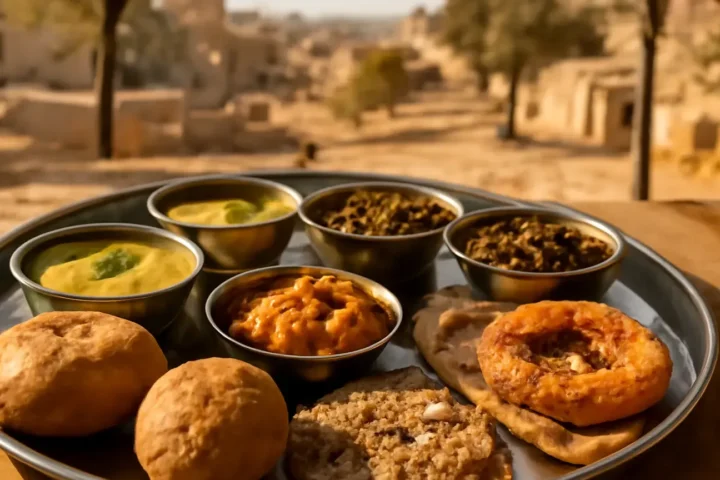
Start with poha and jalebi in the morning: the poha is usually soft and mildly seasoned, with onion, coriander, sev and lemon, while jalebi brings a crisp, syrupy contrast. Order a small portion first because the toppings can make it more filling than it looks.
- Poha-jalebi: A fragrant, flattened-rice breakfast with a sweet, crisp jalebi on the side. Ask for less sev if you prefer a softer texture.
- Kachori or samosa: Choose these for a flaky or crisp shell and a spiced lentil or potato filling. They are best when served hot and busy turnover is visible.
- Bhutte ka kees: Grated corn cooked with milk, spices and tempering. It tastes creamy, gently sweet and savoury rather than like roasted corn.
- Sabudana khichdi: Soft tapioca pearls with peanuts, potato, lemon and spices. It is filling and usually a useful vegetarian option, though ask about fasting-style seasoning if that matters to you.
- Dahi vada: Soft lentil dumplings covered with yoghurt, chutneys and spices. The cool, tangy profile offers a break from fried snacks.
- Garadu: Fried yam pieces with a sharp, spiced coating. They are earthy, crisp and particularly appealing on a cooler evening.
- Malpua, kulfi or rabdi: Finish with one dessert, not all three, because the meal becomes heavy quickly.
Sev is a recurring local texture, but it can overwhelm delicate dishes. Tell the vendor if you want less spice, less chutney or no extra sev. Vegetarian travellers will find many choices, but recipes, frying oil and preparation practices differ by stall.
Where to try the best street food in Indore
The best street food in Indore is spread across two different experiences rather than one single market. Chappan Dukan is convenient for daytime and early-evening grazing, while Sarafa Bazaar is the classic late-night circuit. Neither needs a permit, but individual shops may change hours during festivals, weather or local events.
| Area | Best for | Typical experience | Who it suits |
|---|---|---|---|
| Chappan Dukan | Daytime snacks and casual meals | Organised food lane with varied counters | Families, first-time visitors and short stays |
| Sarafa Bazaar | Night food crawl | Busy stalls, sweets and savoury snacks after the jewellery market closes | Travellers who enjoy crowds and variety |
| Rajwada and old-city lanes | Breakfast and traditional flavours | Older market setting near heritage sights | Visitors combining food with walking and history |
At Chappan Dukan, compare a few small portions instead of ordering one large meal. It is a convenient introduction to local flavours and often easier for children or older travellers because seating and access can be more straightforward. Sarafa is more atmospheric, but crowds, smoke, standing space and uneven pavements may make it tiring.
Where can I try street food in Indore at night?
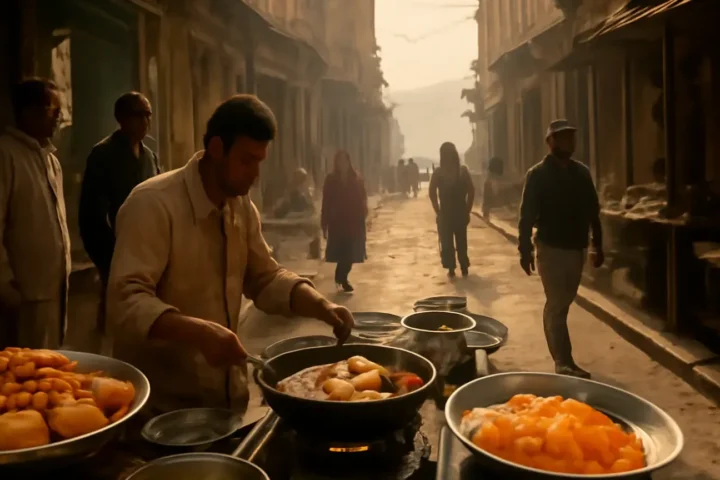
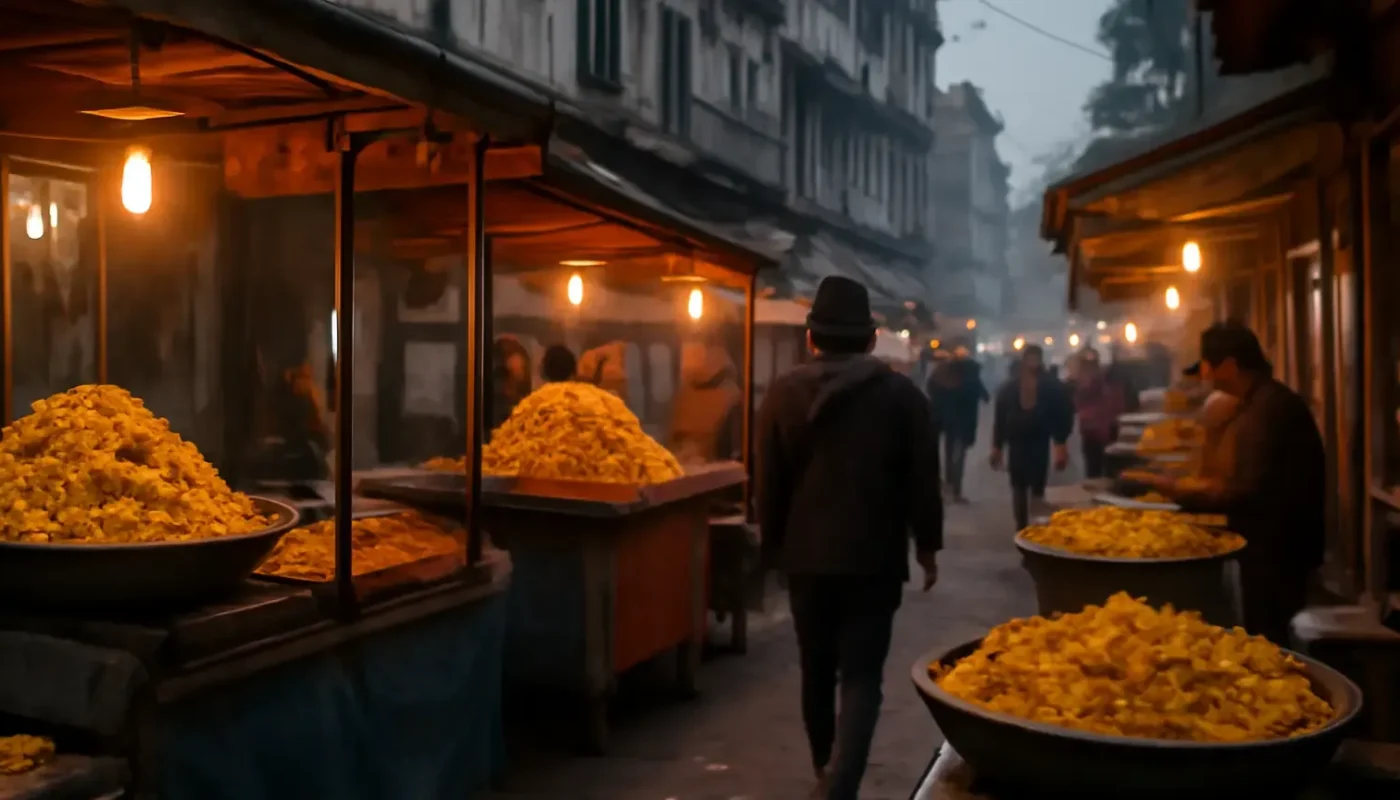
You can try street food in Indore at night at Sarafa Bazaar, where savoury snacks and sweets are served in the jewellery-market area after the daytime trade winds down. Go with a short list, begin with one savoury item and observe stall cleanliness before ordering more.
There is no need to arrive extremely late: an earlier evening visit can be more comfortable, particularly for families. Exact opening and closing times vary, so check locally on the day. During Navratri and other busy periods, expect larger crowds and possible changes to traffic movement. Keep a small amount of cash, use digital payment only where the network works reliably, and avoid blocking shop entrances.
Plan a one-day food crawl route
This food crawl route is designed around appetite, distance and changing flavours. Use it as a framework rather than a fixed timetable.
Day 1: old city, Chappan and Sarafa
- Morning: Begin near Rajwada Palace with poha-jalebi, kachori or a small samosa. Add tea only if you still have room.
- Late morning: Walk around the old market area and allow digestion time. A heritage stop is useful between meals; dress modestly and follow any photography restrictions at religious places.
- Lunch: Choose a simple local meal rather than another round of fried snacks. This keeps the evening crawl enjoyable.
- Afternoon: Visit Chappan Dukan for bhutte ka kees, sabudana khichdi or dahi vada. Share portions with companions.
- Early evening: Take a break at your accommodation. Carry water and avoid arriving at Sarafa already full.
- Night: At Sarafa Bazaar, try garadu or another savoury snack, then select one sweet such as malpua, kulfi or rabdi.
Two days are better if food is your main interest. On the second day, revisit a favourite counter, explore a breakfast neighbourhood and take a slower cultural excursion. A longer Madhya Pradesh itinerary can add Mandu or a visit towards the Narmada River, but these are separate outings and should not be squeezed into a city-only food day.
Best time, weather and festival crowds
October to March is generally the most comfortable period for walking between food stops. Evenings can be pleasant, while December and January may feel cooler after dark. Summer afternoons can be hot, so schedule Chappan Dukan earlier or later and take a proper break indoors.
The monsoon can bring relief from heat but also wet pavements, traffic delays and less comfortable standing at outdoor stalls. Rain may affect frying, seating and market movement. Around Navratri and other festivals, the city can be especially lively, but crowds and altered timings are trade-offs. Check local conditions before committing to a long market walk.
Hygiene tips for Indore food places
Popular Indore food places can be enjoyable without treating every stall as identical. Hygiene is partly about the food itself and partly about how quickly it is sold and replaced.
- Prefer stalls with a steady queue and high turnover, especially for chutneys, dairy and fried foods.
- Choose food cooked in front of you and served hot. Be cautious with uncovered garnishes, cut fruit and water of uncertain origin.
- Check whether the vendor uses separate serving tools and whether raw and cooked ingredients are kept apart.
- Carry hand sanitiser and tissues; market washrooms and hand-washing facilities may be limited.
- Use sealed bottled water or a trusted refill source, and avoid adding ice unless its source is clear.
- If you have allergies or dietary restrictions, ask about ingredients in Hindi or carry a translated note. “Less spicy” may not mean oil-free or chilli-free.
These are sensible hygiene tips, not a guarantee. Anyone with a serious allergy or a medical condition should plan conservatively and consult a doctor about personal precautions before travel.
How much does an Indore food crawl cost?
A realistic budget per person depends on whether you share dishes, choose branded outlets or include taxis and desserts. Prices change with portion size, inflation, location and season.
| Style | Approx. food spend | What it includes |
|---|---|---|
| Light tasting | ₹250–₹450 | Breakfast, two shared snacks and water |
| Full crawl | ₹400–₹900 | Breakfast, Chappan tasting, Sarafa snacks and one dessert |
| Comfortable mixed plan | ₹900–₹1,500 | More individual portions, sit-down meal and app-based rides |
Carry a buffer for bottled water, transport and unexpected café stops. App cabs, auto-rickshaws and local taxis may charge differently depending on demand. Confirm the approximate fare before boarding an auto, and avoid planning the route around one exact price.
Getting around and where to stay
Devi Ahilya Bai Holkar Airport is approximately 8 km from central Indore, although the road journey can take roughly 20–45 minutes depending on traffic. Indore Junction is approximately 2–5 km from many central areas. Indian Railways and road buses connect the city with major destinations, while flights suit travellers arriving from distant metros.
For a detailed trip plan, use an Indore travel guide alongside this food route. Auto-rickshaws work well for short hops, and app-based cabs are useful when carrying luggage or travelling after a long market visit. Walking is practical around compact market stretches, but not necessarily between every stop.
For where to stay, choose a central commercial area for easy access to Chappan Dukan and transport, or stay nearer the old city if Rajwada and Sarafa are your priorities. Airport-side hotels can be convenient for an early flight but less suitable for repeated night-market visits. Travellers booking broader Indore tour packages should confirm whether evening food stops, transfers and hotel location are actually included.
How many days are enough for Indore food?
One full day is enough for a focused Indore food itinerary, while two days suit travellers who want slower meals, sightseeing and a repeat visit to a favourite market. A one-day plan should not attempt Ujjain, Omkareshwar or Mandu as well.
If you have two days, split the experience: dedicate the first to Rajwada, Chappan Dukan and Sarafa; use the second for a relaxed breakfast, museums or a regional excursion. Check road times before adding Omkareshwar or Mandu, since traffic, weather and sightseeing stops can make these longer than expected.
What to pack and mistakes to avoid
- Wear comfortable closed shoes with grip for crowded lanes and wet patches.
- Carry a reusable water bottle if you have a safe refill plan, plus tissues and sanitiser.
- Take a light layer for winter evenings and an umbrella or rain cover during the monsoon.
- Do not order every famous dish in full portions; share and pace the crawl.
- Do not assume a viral reel shows current timings, prices or the best stall.
- Respect queues, local shoppers and shop entrances. Ask before photographing vendors or people.
- Keep phones and wallets secure in crowded markets without treating the area as unsafe by default.
Bottom line
Indore is easiest to enjoy when you follow the city’s rhythm: poha and jalebi in the morning, measured tasting at Chappan Dukan, a pause in the afternoon and a selective night crawl at Sarafa Bazaar. Choose busy stalls, confirm current timings locally, share portions and leave space for the dishes that best match your taste and comfort.
Before you go: prices, timings, permits and road conditions change by season. Please confirm the latest details with Madhya Pradesh Tourism Department, Indore Municipal Corporation, Indian Railways and IRCTC and Devi Ahilya Bai Holkar Airport authority. Last reviewed: October 2026.
Frequently Asked Questions
What should I eat first in Indore?
Begin with poha and jalebi for breakfast, then try a small kachori or samosa. The combination introduces Indore’s savoury, tangy and sweet flavours without using too much appetite early in the day.
Where can I try street food in Indore at night?
Sarafa Bazaar is the main night-food stop, with savoury snacks, fried items and sweets served around the jewellery-market area. Timings and crowd levels vary, so check locally before travelling.
How much does an Indore food crawl cost?
Budget approximately ₹400–₹900 per person for breakfast, several shared snacks, Sarafa tasting and one dessert, excluding accommodation and transport. Prices vary by portion, outlet and season.
Is Indore street food safe for visitors?
It can be enjoyed sensibly by choosing busy stalls, eating food cooked hot, avoiding uncovered chutneys and using safe drinking water. Visitors with allergies or medical concerns should take extra precautions.
Which is better for food, Sarafa Bazaar or Chappan Dukan?
Chappan Dukan suits daytime grazing and families who prefer an organised food lane, while Sarafa Bazaar suits a lively evening crawl with more traditional night-market atmosphere. Many visitors include both.
What is the best time for an Indore food tour?
October to March is generally the most comfortable season for walking and evening eating. Summer afternoons may be hot, and monsoon rain can affect outdoor seating and market movement.

Written by