Jaipur to Jaisalmer Road Trip: A 7-Day Route with Stops
A practical seven-day Jaipur to Jaisalmer route covering Pushkar, Jodhpur, Osian and the Sam or Khuri dunes, with realistic driving stages, stay areas, budgets and planning tips.

Quick answer
A Jaipur to Jaisalmer road trip works best as a one-way seven-day journey through Ajmer-Pushkar, Jodhpur, Osian and the Thar Desert. Allow approximately 650–700 km of driving, with two longer highway days and at least one full day each for Jodhpur and Jaisalmer. Stay near Pushkar, Jodhpur’s old city, Jaisalmer Fort or Sam/Khuri. Finish in Jaisalmer and return by train or flight rather than forcing a rushed drive back to Jaipur.
Key facts at a glance
| Ideal duration | 7 days, one way |
|---|---|
| Approx. route distance | 650–700 km with sightseeing |
| Total driving time | Approx. 14–17 hours, excluding stops |
| Best season | October to March |
| Approx. budget | ₹20,000–₹45,000 per person, excluding flights |
| Nearest airports | Jaipur, Jodhpur and Jaisalmer airports |
| Return options | Jaisalmer train, flight or pre-booked car |
| Permits needed | No general tourist permit for this route |
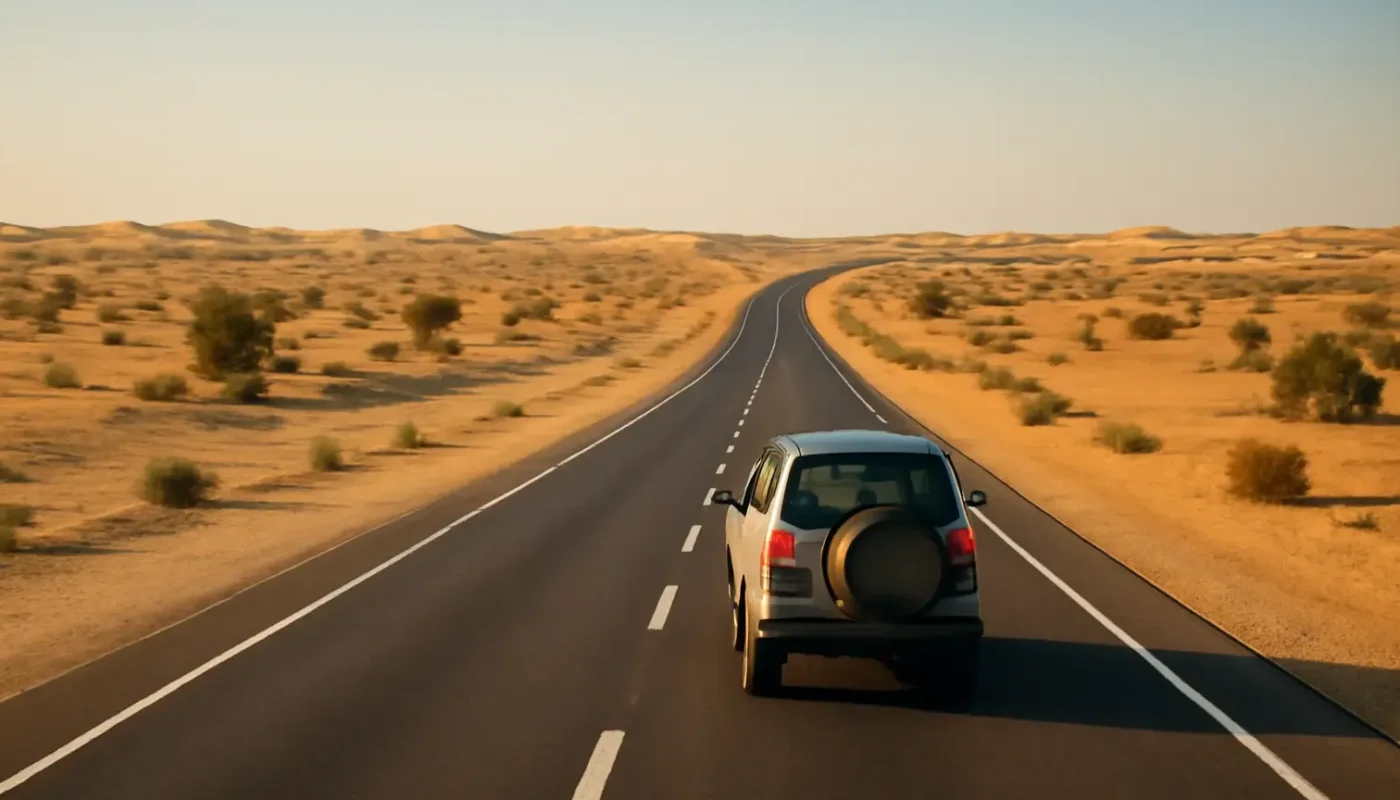
A Jaipur to Jaisalmer road trip is most enjoyable as a west Rajasthan journey rather than one long transfer. The road crosses the Aravalli region, the dry Marwar plains and the Thar Desert. This one-way plan begins in Jaipur and ends in Jaisalmer, so you do not spend two days retracing the same highway.
The Jaipur to Jaisalmer distance varies according to the roads and detours selected. Allow approximately 650–700 km for the route with local sightseeing. Drive times are estimates and change with traffic, roadworks, town congestion, meal breaks and the season. Start early, avoid unfamiliar rural roads after dark and confirm accommodation before entering desert areas.
Route at a glance
This Rajasthan road trip itinerary follows Jaipur–Ajmer–Pushkar–Jodhpur–Osian–Jaisalmer. The Pushkar and Ajmer stops work well at the beginning, Jodhpur provides the main heritage break and Osian offers an optional temple visit before the longer western drive.
| Stage | Approx. distance | Usual driving time | Why stop |
|---|---|---|---|
| Jaipur to Ajmer/Pushkar | 145–155 km | 3–4 hours | Pushkar Lake, temples and a relaxed first night |
| Pushkar to Jodhpur | 185–220 km | 4–5 hours | Mehrangarh Fort and blue-city lanes |
| Jodhpur to Jaisalmer via Osian | 280–300 km | 5–7 hours | Osian temples and changing desert scenery |
| Jaisalmer local and desert areas | 80–140 km | 2–4 hours daily | Fort, havelis, Kuldhara and sand dunes |
Bikaner, Barmer and Kuldhara can all be interesting, but including every detour in seven days may create long, tiring transfers.
How to arrange the trip
Starting in Jaipur
Jaipur International Airport is the most convenient arrival point for travellers flying from other Indian cities. Jaipur Junction is useful for rail arrivals, while Ajmer Junction can work if Pushkar is the intended first stop. A self-drive car, chauffeur-driven cab or rental with clear intercity permissions are the main options.
A chauffeur-driven car suits many visitors because the driver can manage highway fatigue, local approaches and desert transfers. Self-drive is suitable for confident drivers who are comfortable with long Indian highway sections and limited services beyond Jodhpur. Confirm interstate travel, insurance, roadside assistance and the permitted drop location before booking.
Ending in Jaisalmer
Jaisalmer has a railway station and a small airport, although connectivity can vary by season. A train may be more economical, while a flight saves time when seats are available. Check Indian Railways or the airline before finalising the itinerary. If returning by road to Jaipur, allow at least two additional days; attempting the entire return drive in one day is not a sensible extension.
Seven-day itinerary
Day 1: Jaipur to Ajmer and Pushkar
Leave Jaipur after breakfast and allow approximately three to four hours to reach Ajmer or Pushkar, depending on traffic. Ajmer is a useful cultural stop for visitors interested in historic religious sites. Pushkar suits a slower first night, with a walk around Pushkar Lake, market streets and sunset viewpoints.
Respect local customs at religious places. Dress modestly, follow photography instructions and be cautious of unofficial demands for donations. Stay in Pushkar if atmosphere is the priority; stay near Ajmer Junction if rail access and a wider choice of transport matter more.
Day 2: Pushkar to Jodhpur
The Pushkar-to-Jodhpur drive takes approximately four to five hours without lengthy stops. Reach Jodhpur by afternoon and use the remaining time for the old city, local markets or a relaxed meal. Jodhpur is a good place to refuel, check the car and stock water before the longer western stage.
For Jodhpur stay areas, choose the old city for heritage atmosphere and walkable access to markets. Ratanada, Circuit House or the airport side offer easier parking, larger hotels and a quicker departure the next morning. Local foods include dal baati churma, mirchi vada and mawa kachori; choose clean, busy establishments and keep hydrated.
Day 3: Full day in Jodhpur
Reserve a full day for Mehrangarh Fort, Jaswant Thada and the old-city lanes. The fort involves walking, steps and exposed sections, so begin early in warmer months. Explore the blue-painted neighbourhoods respectfully rather than treating them only as photo backdrops.
Do not use this day for a long out-and-back excursion unless you are willing to reduce time in Jodhpur. The city is the itinerary’s main historic stop and deserves more than a rushed evening.
Day 4: Jodhpur to Jaisalmer via Osian
Start early for the approximately 280–300 km drive to Jaisalmer. The Osian temple stop is worthwhile for travellers interested in its historic Jain and Hindu temple complex. Allow extra time only if the temples are a genuine interest; otherwise, a brief break and lunch are enough.
After Osian, services become more spread out and the landscape becomes increasingly arid. Top up fuel in Jodhpur or another reliable town, carry drinking water and avoid depending on one specific fuel station. Reach Jaisalmer before late evening where possible. The approach roads can feel empty, and navigation or roadside assistance may be limited after dark.
Day 5: Jaisalmer Fort and the old city
Spend the day inside and around Jaisalmer Fort, a living fort with homes, shops and places of worship. See the major havelis and leave time for a calm walk near the fort or nearby viewpoints. A local guide can add historical context, but agree on the scope and price before beginning.
Stay inside the fort only if you understand that lanes can be narrow, vehicles may not reach the property and water-management concerns affect this historic settlement. Hotels outside the fort, especially around the old city and central Jaisalmer, generally offer easier vehicle access. Avoid climbing on fragile structures or photographing residents without permission.
Day 6: Kuldhara and a desert night
Use a local cab or pre-arranged vehicle for Kuldhara and a desert stay near Sam or Khuri. Kuldhara is an archaeological site with a quiet, interpretive visit rather than a full-day destination. Sam Sand Dunes has the widest choice of organised desert camps and activities, while Khuri desert village is often chosen by travellers seeking a smaller-scale setting and quieter atmosphere.
Desert camps commonly offer camel rides, jeep excursions, folk performances and meals, but inclusions and operating standards differ. Ask whether transport, dinner, breakfast, bedding, hot water and cultural performances are included. Camel rides should be handled through responsible operators, with reasonable durations and care for the animals.
Day 7: Buffer morning and departure
Keep the final morning deliberately light. Visit a market, see Gadisar Lake or rest before a train or flight. If your departure is late, use the time for a short local excursion rather than adding another remote detour.
This buffer protects the trip from delays caused by traffic, a late desert transfer, vehicle trouble or a missed connection. Travellers who want a slower holiday can add another Jaisalmer night instead of trying to insert Bikaner or Barmer.
Best time and seasonal trade-offs
The best time for Rajasthan road trip travel is generally October to March, when daytime sightseeing is easier and desert nights are manageable with warm layers.
| Season | What to expect | Who it suits |
|---|---|---|
| October to November | Pleasant days, cooler nights and improving desert conditions | Most road-trippers and photographers |
| December to February | Comfortable sightseeing; cold nights in desert camps | First-time visitors, families and heritage travellers |
| March | Warmer afternoons and fewer winter crowds | Travellers comfortable with heat |
| April to June | Very hot afternoons and demanding road conditions | Travellers with a heat-tolerant, flexible plan |
| July to September | Potentially humid, variable weather and occasional rain disruption | Budget-focused travellers checking forecasts carefully |
Desert nights can be genuinely cold in winter, so do not pack only for warm afternoons. During festival periods, room rates and transport demand can rise; confirm availability before arrival.
Budget, fuel and road planning
For two people sharing a private car and mid-range rooms, a seven-day land-only trip may cost approximately ₹20,000–₹45,000 per person, excluding flights and major shopping. This Rajasthan road trip budget is a planning range, not a fixed quote.
- Car and driver: approximately ₹30,000–₹55,000 for a seven-day package, depending on vehicle, inclusions, season and drop arrangements.
- Fuel: approximately ₹7,000–₹12,000 for a typical petrol or diesel car over the route, depending on mileage, detours and fuel prices.
- Accommodation: approximately ₹1,500–₹6,000 per room per night for budget to comfortable stays; desert camps can be higher.
- Food and drinks: approximately ₹700–₹1,500 per person per day for ordinary restaurants and cafés.
- Activities and entry fees: keep an extra approximate ₹2,000–₹6,000 per person for forts, guides, camel rides and desert experiences.
Fuel up before the Jodhpur-to-Jaisalmer stage and again in Jaisalmer before going to remote desert areas. Carry a small emergency cash reserve because card and mobile-payment connectivity may be inconsistent outside towns. Confirm whether tolls, parking, driver allowance and interstate taxes are included in a cab quote.
Rajasthan road conditions vary by section and season. Allow for town congestion, roadworks, uneven shoulders and long stretches with fewer services. Start early, take breaks and avoid driving unfamiliar rural roads after dark.
Where to stay
- Pushkar: central market or lake area for atmosphere; outskirts for quieter resorts and parking.
- Jodhpur: old city for heritage character; Ratanada or the airport side for vehicle access and practical hotels.
- Jaisalmer: fort or old city for walking; central and outer areas for parking and larger properties.
- Sam: a broad range of organised desert camps and activities.
- Khuri: a quieter alternative for travellers who prefer a less commercial desert setting.
Read recent reviews about cleanliness, water use, heating, parking and noise rather than choosing only by photographs. A Rajasthan travel guide can help with broader regional planning, but hotel policies and desert-camp inclusions should be checked directly.
Permits, documents and local transport
No general tourist permit is normally required for this route. Carry a valid driving licence, vehicle registration, insurance, pollution certificate and identification. For a rented car, keep the rental agreement and confirm interstate authorisation. Foreign visitors should carry passport and visa documents and follow any registration instructions from their accommodation.
For Jaisalmer local transport, use auto-rickshaws or local cabs for short city journeys and a pre-booked vehicle for Kuldhara and the dunes. Many fort lanes are unsuitable for cars, so arrange parking and walking routes in advance. Use registered or clearly identified local operators for desert safaris.
Check the Rajasthan tourism department, local administration, Indian Railways or IRCTC, relevant airport and desert-camp operator before travel. Conditions, access rules, festival arrangements and transport schedules can change.
What to pack
- Breathable clothing, a light jacket and warm layers for winter desert nights.
- Sun protection, sunglasses, a hat and reusable water bottle.
- Comfortable shoes with grip for forts, temples and sandy ground.
- Phone charger, power bank, offline maps and a small torch.
- Regular medicines, personal documents and copies of booking details.
- A modest outfit for religious sites and a scarf or shawl for dust and sun.
People with heat sensitivity, dehydration concerns or other health conditions should plan conservatively and consult a doctor before travelling in hotter months. Keep walking and sightseeing flexible rather than treating every stop as compulsory.
Mistakes to avoid
- Trying to drive Jaipur to Jaisalmer in one day, leaving little margin for traffic or fatigue.
- Adding Bikaner, Barmer and every desert village to a seven-day plan.
- Driving long rural stretches after dark without checking road and service conditions.
- Assuming a desert camp includes transfers, activities and all meals.
- Booking a fort hotel without checking vehicle access and parking.
- Leaving the last day without a buffer before a train or flight.
- Choosing a cab quote without clarifying kilometres, tolls, driver allowance and drop charges.
Travellers comparing curated Rajasthan tour packages should use the same checklist: number of driving hours, hotel locations, desert inclusions and whether the return journey is included.
Who this road trip suits
This route suits couples, families with older children, friend groups and first-time visitors who want a mix of historic cities and desert landscapes. It is less suitable for travellers who dislike long drives, need a slow pace or want to explore every attraction in depth. Families with young children should shorten sightseeing days, carry snacks and choose hotels with reliable access and facilities.
Bottom line
The best Jaipur Jaisalmer road trip is a one-way seven-day plan: Pushkar for the first night, Jodhpur for history, Osian as an optional temple stop, and Jaisalmer with one dedicated desert day. Protect the schedule with an early start, reliable fuel planning and a final buffer. If a choice is necessary, drop a detour rather than sacrificing rest or adding another exhausting highway day.
Before you go: prices, timings, permits and road conditions change by season. Please confirm the latest details with Rajasthan Tourism Department, Indian Railways and IRCTC, Jaipur International Airport and Jodhpur Airport and Jaisalmer Airport authorities. Last reviewed: October 2026.
Frequently Asked Questions
How many days are enough for a Jaipur to Jaisalmer road trip?
Seven days are comfortable for a one-way itinerary covering Pushkar, Jodhpur, Osian and Jaisalmer. Five days is possible but requires shorter stays and more driving. Add at least two days if you want to drive back to Jaipur.
Where should I stop between Jaipur and Jaisalmer?
Pushkar is the most practical first stop, followed by Jodhpur for a full heritage day. Osian is a useful short stop on the Jodhpur-to-Jaisalmer drive. Avoid adding too many detours because the western stages are long.
Is Jaipur to Jaisalmer road trip safe by car?
The route is generally manageable in daylight with a well-maintained vehicle, but conditions vary. Start early, avoid unfamiliar rural roads at night, carry water, check fuel availability and use a reliable driver or rental company.
What is the best route from Jaipur to Jaisalmer?
A practical route is Jaipur–Ajmer–Pushkar–Jodhpur–Osian–Jaisalmer. It combines major attractions with reasonable driving stages and can be completed one way in approximately seven days with local sightseeing.
How much does a Jaipur to Jaisalmer road trip cost?
A seven-day land-only trip may cost approximately ₹20,000–₹45,000 per person for two people sharing a private car and mid-range accommodation. Season, vehicle type, hotel category and desert activities change the total.
Should I visit Sam or Khuri on a Jaisalmer trip?
Choose Sam for more organised desert camps and activity choices. Choose Khuri for a quieter village-based desert experience. Compare transfer distance, accommodation inclusions, noise levels and activity standards before booking.

Written by