Chitwan: Into the Wild — Guides, Itineraries & Tour Packages
Chitwan is Nepal’s premier wildlife destination, centred on Chitwan National Park, a UNESCO-listed landscape known for one-horned rhinoceroses, gharials, birds and guided jungle experiences. It suits families, couples, photographers and first-time Nepal visitors seeking a gentler alternative to mountain treks. October to June is generally the most practical season; October remains warm, green and occasionally showery after monsoon. Most Indian travellers reach it by road from Kathmandu or Pokhara, or fly to Bharatpur and transfer to Sauraha, the main visitor base.
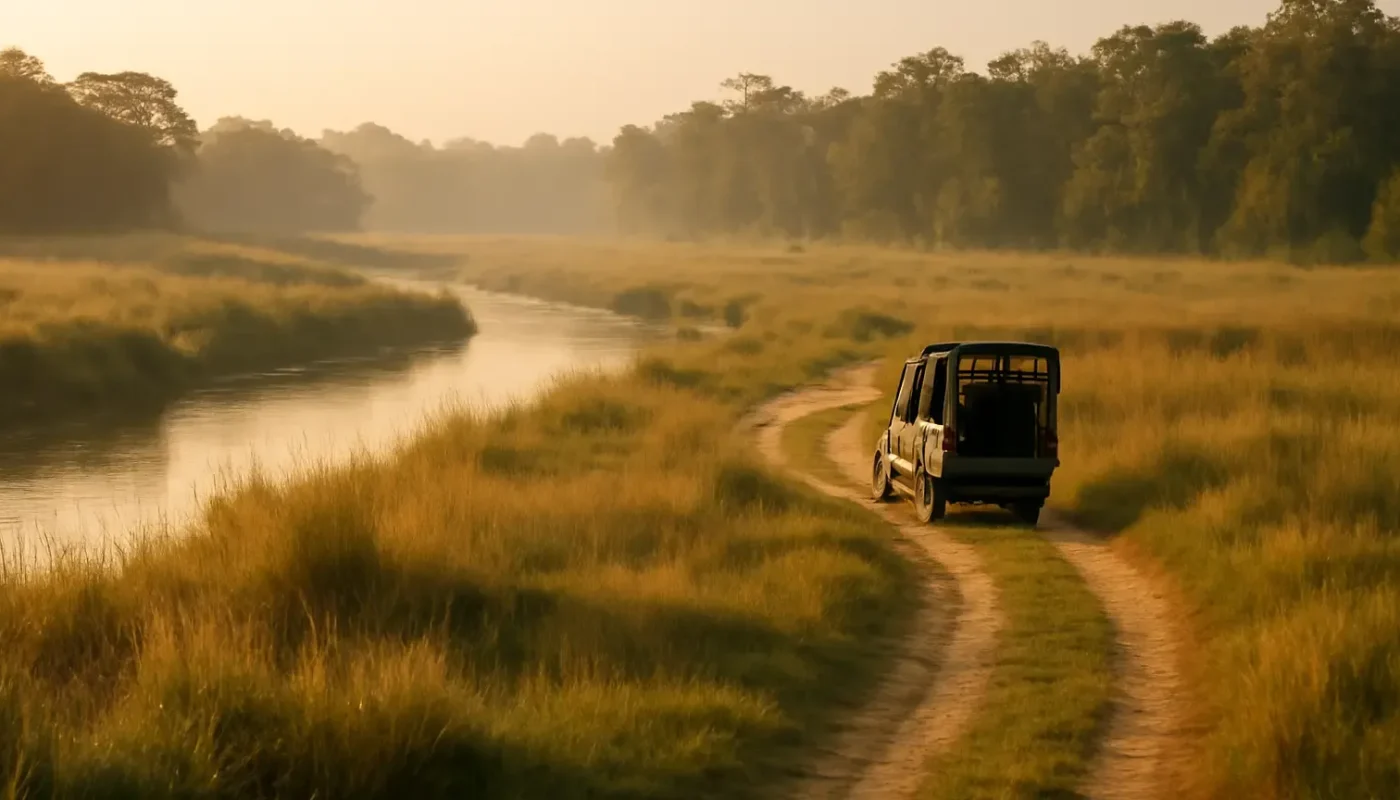
Lush post-monsoon wildlife season
October is warm and increasingly dry after monsoon; forests are lush and wildlife viewing is promising, though brief showers can still occur.
Chitwan Circuit & Driving Distances
Frequently Asked Questions: Chitwan Travel
October to June is generally best for safaris. October is lush and warm, while March to May is hotter and drier. July to September is wetter.
Fly to Kathmandu and continue by road or domestic flight to Bharatpur, or take a long-distance bus or private vehicle from Kathmandu, Pokhara or the India-Nepal border.
Yes, park entry permits and, for some activities, guide or operator arrangements are required. Fees and rules change, so check official Nepal tourism or park sources.
Sauraha is a well-established visitor base. Use authorised guides, follow wildlife instructions, avoid walking alone near forest edges after dark and do not approach animals.
A basic stay with meals and activities may cost approximately NPR 5,000–15,000 per person per day, excluding international or long-distance transport; safari packages vary.
Allow 2 nights for a compact visit and 3 nights for more flexible safari, canoeing, birdwatching and village experiences.
Build Your Personalised Chitwan Itinerary
Tell us your travel month, pace and dream destinations. A senior route planner will send a transparent day-by-day plan with direct fleet pricing.