Kashmir Great Lakes Trek: Route, Fitness and Packing Checklist
A practical Kashmir Great Lakes Trek guide covering the classic route, day-wise structure, fitness preparation, weather, packing, transport, permits, budgets and responsible trekking.

Quick answer
The Kashmir Great Lakes Trek is a high-altitude, 6–8-day Himalayan trek in Jammu and Kashmir, usually linking Sonamarg with Naranag through alpine lakes, exposed passes and changing camps. Plan for long walking days, steep ascents, cold nights and unpredictable weather rather than a casual sightseeing trip. The usual season is July to September, subject to snow and local permissions. Build fitness for 6–10 hours of walking, carry layered rain-and-cold protection, and confirm the route, permits and transport locally before departure.
Key facts at a glance
| Typical duration | Approx. 6–8 trekking days, route dependent |
|---|---|
| Usual season | July to September, subject to snow and permissions |
| Starting point | Sonamarg, Ganderbal district, Jammu and Kashmir |
| Common finish | Naranag, Ganderbal district |
| Highest sections | Passes and camps roughly 3,500–4,200 m |
| Nearest airport | Srinagar International Airport, approx. 90–110 km from Sonamarg |
| Rail option | Jammu Tawi, approx. 270–300 km by road to Srinagar |
| Difficulty | Moderate to challenging; altitude and long days matter |
What makes the Kashmir Great Lakes Trek demanding
The Kashmir Great Lakes Trek is one of the most scenic multi-day routes in the Kashmir Valley, but its postcard landscapes can hide the physical effort involved. The classic line runs from Sonamarg towards Naranag, crossing high passes and visiting lakes such as Vishansar, Kishansar, Gadsar, Satsar, Gangabal and Nundkol. The exact sequence varies with the trek operator, local administration, weather and trail conditions.
For packages, routes and FAQs in one place, see our Kashmir travel guide.
This is not a walk between road-accessible viewpoints. Trekkers may spend approximately 6–10 hours on the trail, gain and lose altitude repeatedly, and camp in exposed terrain. The route commonly reaches passes above 3,500 metres, with some itineraries approaching or exceeding 4,000 metres. Fitness, acclimatisation, sensible pacing and a reliable support team are more important than speed.
For a realistic view of Kashmir Great Lakes Trek difficulty, plan for sustained ascents, uneven ground, exposed passes and several consecutive days of walking. Beginners with good walking fitness can attempt the trek with a reputable operator and proper preparation. It is less suitable for anyone expecting comfortable accommodation, predictable weather or short daily walks.
Kashmir Great Lakes trek route and itinerary structure
A standard KGL trek itinerary is often described as a 6–8-day walking route, excluding arrival and departure days. It should be treated as a planning framework rather than a guaranteed schedule. Camps may move because of snow, rain, landslides, local restrictions or the condition of the group.
Day 1: Sonamarg to the first camp
After a road transfer to Sonamarg, the trail generally climbs through meadows and forest towards a high campsite. This opening day tests your pace immediately. Keep your backpack light, drink regularly and avoid treating the first ascent as a race.
Day 2: First lake and Nichinai area
The route usually continues towards the Nichinai side, with broad grasslands, streams and mountain views. Depending on the chosen camp, trekkers may see the first major alpine lake or approach it on the following day. Rain can make stream crossings and grassy slopes slippery.
Day 3: Vishansar and Kishansar lakes
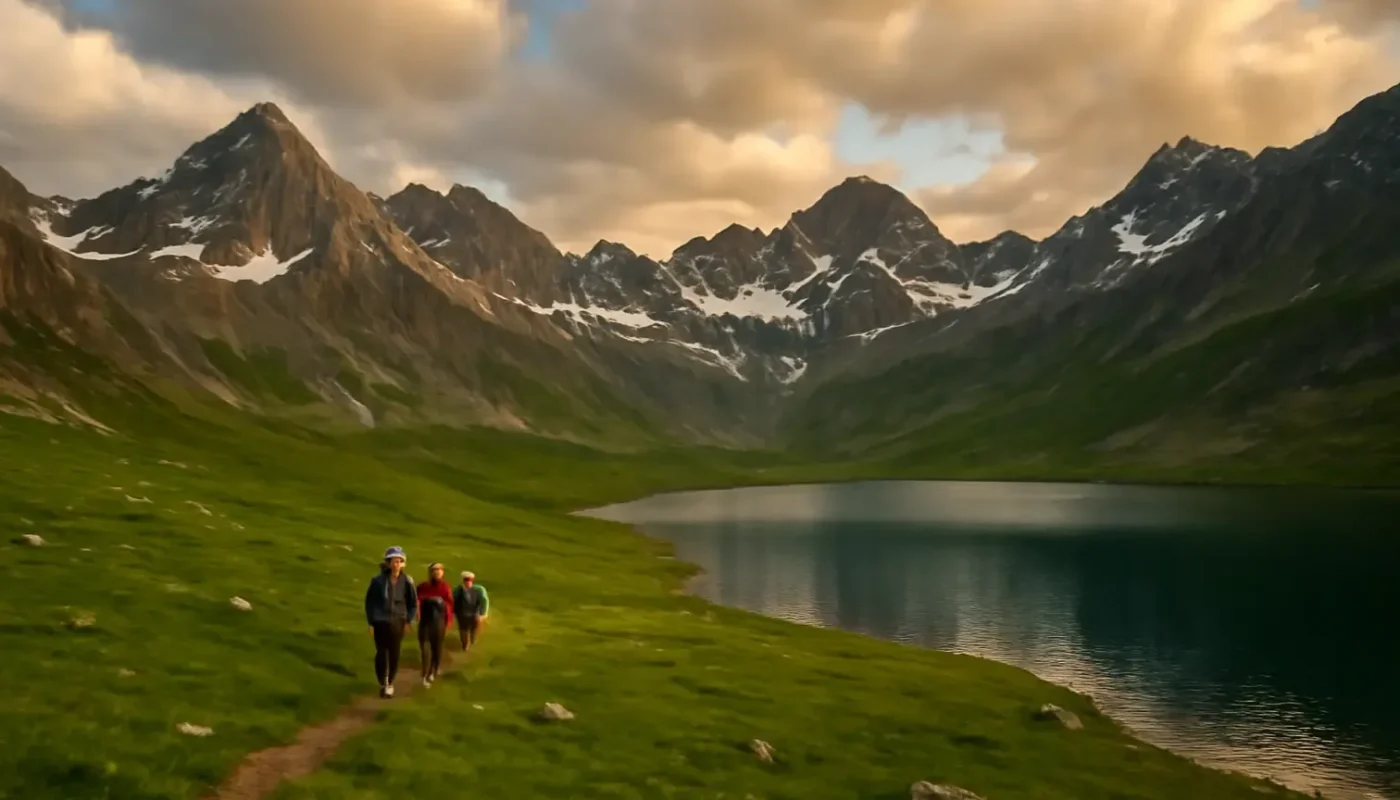
The Vishansar–Kishansar section is the visual centre of many itineraries. The twin lakes sit beneath rugged ridges and snow-streaked peaks. The trail can be undulating rather than uniformly uphill, so allow time for photo stops without delaying the group.
Day 4: Gadsar Pass and Gadsar Lake
Crossing Gadsar Pass is commonly one of the hardest days. The ascent is steep and the descent can be loose or slippery. Snow may remain on the pass early in the season. Gadsar Lake and nearby tarns reward a steady approach, but weather should take priority over photography.
Day 5: Satsar lakes
The trail towards Satsar generally crosses open high-altitude terrain and several water channels. The number of visible lakes depends on water levels, route choices and weather. This can still be a long day, despite the absence of one dramatic pass.
Day 6: Gangabal and Nundkol
The route usually moves towards the Gangabal and Nundkol lake system, with views of Mount Harmukh in favourable conditions. Camps near these lakes may feel especially cold at night. Protect electronics and spare clothing from condensation and wet ground.
Day 7 or 8: Descend to Naranag and drive onward
The Naranag trek route section leads towards a village known for its historic temple complex and mountain setting. Knees often take more strain on the way down, so trekking poles and controlled steps are useful. From Naranag, groups commonly arrange a road transfer to Srinagar or another agreed destination.
| Route approach | What it offers | Who it suits |
|---|---|---|
| Sonamarg to Naranag | Classic direction, gradual introduction to high meadows followed by major lake sections | Most first-time trekkers using organised departures |
| Naranag to Sonamarg | Reverse direction; daily camps and acclimatisation pattern may differ | Travellers whose operator or local permissions favour the reverse route |
| Shortened or altered route | Fewer lakes or changed camps because of weather, access or group ability | Trekkers prioritising safety and flexibility over completing every landmark |
Best time, weather and trail conditions
Kashmir Great Lakes Trek best time is generally July to September, but each month has trade-offs. Snow, rainfall and local decisions can change the usable season.
- July: Meadows are often lush and early-season snow may remain near passes. Monsoon moisture can affect the approach from the plains, although Kashmir conditions vary by valley.
- August: Usually a popular period for green landscapes and accessible trails, but rain can produce slippery ground, wet tents and cloud-obscured views.
- September: Often brings clearer skies and cooler nights. Late-season cold, shorter daylight and an early snowfall risk require warmer equipment and flexibility.
- Outside the usual season: Heavy snow, closed passes and limited support can make the route unsuitable without specialised local planning. Do not assume a summer itinerary works in spring or autumn.
Ask the operator for a recent trail update before leaving Srinagar. A forecast is helpful but cannot replace local advice about pass crossings, river levels and camping permissions.
Fitness and altitude preparation
Prepare for back-to-back days rather than one impressive workout. For at least six to eight weeks, combine brisk walking, stairs or hill walking with basic strength work. A useful target is being comfortable with a 10–15 km walk carrying a daypack, though the actual distance varies by itinerary.
- Walk on uneven ground and practise controlled descents.
- Build leg and hip strength with step-ups, squats and lunges suited to your ability.
- Use the shoes and backpack you plan to take, not brand-new gear on departure day.
- Include rest and recovery; excessive training immediately before travel can leave you fatigued.
- Tell the trek leader about asthma, heart or lung conditions, previous altitude problems or regular medication, and consult a doctor if you have health concerns.
Altitude symptoms such as headache, unusual breathlessness, confusion, severe weakness or persistent vomiting should never be ignored. Inform the leader early. A descent may be necessary; do not hide symptoms to remain with the group.
How to reach Sonamarg and return from Naranag
If you are researching how to reach Sonamarg, the most practical options are usually a flight or train journey to the region followed by a pre-arranged road transfer.
By air: Srinagar International Airport is the most practical airport. Sonamarg is approximately 90–110 km away by road, commonly taking around 3–5 hours depending on traffic, weather, security checks and the exact pickup point. A Srinagar to Sonamarg taxi can be arranged through the operator, but confirm the vehicle, fare and pickup time in advance. Allow a buffer day instead of connecting directly from a flight to a high-altitude trail.
By rail: Jammu Tawi is the main long-distance railway option for many Indian travellers. The road journey from Jammu to Srinagar is approximately 270–300 km and can take around 7–10 hours or longer with traffic and road conditions. Rail services and road timings change, so check Indian Railways or IRCTC close to travel.
By road: Srinagar has taxis and shared transport for Sonamarg, but availability and rates vary by season, vehicle type and local regulations. Pre-arrange the trek transfer with your operator. After reaching Naranag, confirm whether the return vehicle goes to Srinagar, the airport or another town. Do not assume a local taxi will be waiting after a late descent.
Budget, stays and booking decisions
For planning purposes, Kashmir trek cost depends on whether you join a group departure, hire a private guide, carry your own equipment and add hotel nights in Srinagar. For Indian travellers, an organised trek package may be approximately ₹15,000–₹35,000 per person for the trekking component, excluding flights or trains, depending on inclusions, group size and season. A complete trip from a major Indian city can easily cost approximately ₹25,000–₹60,000 or more after transport, stays, meals outside the trek and gear.
- Before the trek: Budget for one or two nights in Srinagar or Sonamarg, local transfers, meals and an emergency reserve.
- During the trek: Confirm whether tents, sleeping bags, meals, permits, local support, porter or mule support and return transport are included.
- Equipment: Renting can reduce upfront cost, but inspect waterproofing, insulation, fit and cleanliness before accepting gear.
- Tips and extras: Keep cash for small purchases where digital payments may not work. Ask the operator about fair payment practices for local staff.
Ask specifically about Kashmir trekking camps, including whether tents, sleeping arrangements, meals and toilet facilities are included. Camps can be exposed and cold, and locations may change with weather or permissions.
In Srinagar, areas around Dal Lake, Rajbagh and the city centre offer different mixes of views, transport access and price. Sonamarg is useful for an early start but generally has fewer urban conveniences. Near Naranag, accommodation is limited compared with Srinagar, so many groups return to the city after the trek.
Permits, documents and local checks
Kashmir Great Lakes permits and registration requirements can change according to the route, season, security situation, forest or protected-area rules and whether an organised operator is handling the paperwork. Carry a government photo ID, copies stored securely, emergency contacts, travel insurance details and any required medical information.
Before payment, ask for the current permit process, entry restrictions, insurance or evacuation arrangements, inclusions and cancellation terms in writing. Verify the operator’s local registration and its plan for emergencies. The route may pass through areas where connectivity is weak, so a satellite communication arrangement or a clear check-in plan is valuable.
Complete Kashmir Great Lakes Trek packing checklist
Use this Kashmir trek packing list as a starting point, then adjust it for the operator’s equipment, the forecast and the expected trail conditions.
- Clothing: moisture-wicking base layers, fleece or warm mid-layer, insulated jacket, waterproof shell, trekking trousers, thermal wear, sun hat, woollen cap, gloves and several pairs of wool or synthetic socks.
- Footwear: broken-in trekking shoes with good grip, lightweight camp footwear and gaiters if the operator recommends them for snow or mud.
- Sleep and shelter: sleeping bag suitable for expected sub-zero nights, sleeping liner, headlamp with spare batteries and a compact dry bag.
- Water and food: reusable bottles or hydration system, water-purification method, personal snacks and electrolyte sachets if appropriate for you.
- Personal essentials: sunscreen, sunglasses with strong UV protection, lip balm, basic toiletries, quick-dry towel, personal medicines, blister care and a small first-aid kit.
- Documents and electronics: ID, permits or booking documents, cash, power bank, waterproof phone protection and offline copies of important contacts.
- Waste management: reusable bags for carrying wrappers and used tissues. Avoid single-use plastic and pack out everything you bring.
Do not overpack cotton clothing, hard-shell suitcases or multiple pairs of heavy shoes. Keep your daypack light and use luggage storage in Srinagar for items that are unnecessary on the trail.
Responsible trekking and mistakes to avoid
Responsible trekking in Kashmir means following local guidance, reducing waste and respecting communities, wildlife and religious places along the route.
- Do not litter, carve names on rocks or collect flowers, shells or other natural objects.
- Use designated camps and toilets where provided. Keep human waste well away from water sources and follow the operator’s local system.
- Ask before photographing local people, shepherds or religious sites. Dress modestly in villages and treat Naranag’s temple area respectfully.
- Do not feed animals or leave food waste near camps.
- Do not split from the group for a better photograph, especially near passes, steep slopes or streams.
- Do not promise fixed lake counts, camp locations or completion dates to family when weather can alter the plan.
- Choose operators who employ local guides and support staff fairly, use appropriate waste practices and explain evacuation procedures clearly.
Who should choose this trek?
The trek suits travellers who enjoy remote landscapes, camping, long walking days and changing plans. It can be a rewarding first Himalayan multi-day trek for a fit beginner with professional support. It is not a good match for someone seeking road access to every viewpoint, guaranteed sunshine, hotel rooms each night or a relaxed holiday with minimal exertion.
Bottom line
Plan the Kashmir Great Lakes Trek around flexibility rather than a fixed promise of camps, prices or lake views. Build endurance, arrive with a weather-ready packing list, keep a buffer day in Srinagar, and confirm permits and trail conditions with local authorities or a responsible operator. The route is at its best when safety, local respect and low-impact travel come before completing an itinerary on paper.
Before you go: prices, timings, permits and road conditions change by season. Please confirm the latest details with Jammu and Kashmir Tourism Department, Jammu and Kashmir local administration, Indian Railways and IRCTC and Srinagar International Airport authorities. Last reviewed: October 2026.
Frequently Asked Questions
How difficult is the Kashmir Great Lakes Trek?
It is generally moderate to challenging because of long 6–10-hour walking days, steep passes, uneven descents and camps at roughly 3,500–4,200 metres. Fit beginners can consider it with preparation and organised local support.
What is the best time for the Kashmir Great Lakes Trek?
July to September is the usual trekking window. July may have lingering snow, August can bring wet trails, and September can offer clearer weather but colder nights. Confirm current trail access before travelling.
What should I pack for the Kashmir Great Lakes Trek?
Pack broken-in trekking shoes, layered warm clothing, waterproof outerwear, an insulated jacket, gloves, cap, sleeping bag, headlamp, water-treatment method, sunscreen, personal medicines, ID and dry bags.
How many days are needed for the KGL trek?
The walking portion commonly takes approximately 6–8 days, with extra days needed for arrival, acclimatisation, weather delays and the return journey. Operators may change the schedule or camps.
How do I reach the Kashmir Great Lakes Trek starting point?
Most trekkers fly or travel by road to Srinagar and then take a pre-arranged vehicle to Sonamarg, approximately 90–110 km away. Road time is commonly around 3–5 hours but varies.
What permits are required for the Kashmir Great Lakes Trek?
Requirements vary by route, season, local administration and protected-area rules. Ask your operator to confirm current registrations and permits, and verify them with the relevant Jammu and Kashmir authorities before departure.

Written by